Brahmin matrimony
Brahmin marriage bureau in Delhi, for NRIs too
A Brahmin marriage bureau in Delhi since 2012, for families in India and abroad.
The short answer
Brahmin matrimonial services in Delhi and abroad
Brahmin matrimonial services from Delhi since 2012, for families in India and abroad.
The full answer
Evara Matrimony has offered Brahmin matrimonial services from Delhi since 2012, for families in India and abroad. Families tell us their regional community, such as Saraswat, Kanyakubja, Iyer or Deshastha, and how widely to look, and introductions follow. Gotra and pravara stay with the family. Joining is free; Select, with a named matchmaker, is priced on the plans page.
Matchmaking that knows the map
Why Evara for Brahmin families
14+ years of matching Brahmin families across India and the diaspora has taught us where the real considerations lie.
Regional communities
Iyer, Iyengar, Deshastha, Chitpavan, Karhade, Saraswat, Kanyakubja, Maithil, Goud Saraswat and Havyaka families each keep their own language and calendar. Evara matches on community.
Gotra stays with your family
Evara matches on community, not on gotra or pravara. Whether an alliance clears those is a judgement your family makes with the household it is considering.
Sect and tradition
From Smarta and Vaishnava families to the Vadakalai and Thenkalai sub-sects and beyond, sect is not something Evara records. It stays with your family, and it is worth naming early.
Verified profiles
Every profile is verified before it goes live, and its photos are approved by a person. On Select or Reserve a matchmaker curates each introduction by hand. What each check establishes, and what it does not, is set out on the profile verification page. How profiles are checked.
A pan-India and diaspora reach
Brahmin families are settled across every region of India and in large numbers abroad. We connect families across cities and countries, back home and outward.
Handled quietly
Community circles talk, and many families prefer an alliance to be discussed privately. Membership: only verified Evara members can see your profile, never the public or search engines. Select and Reserve: while your plan is active, your profile is taken out of what members see.
- Clients50,000+
- Years14+
How it works.
Three steps, all in the Evara app.
Create your profile
Verified before it goes live.
Receive your matches
Each morning, in the app.
Say hello
Chat opens when you both agree.
Two ways to begin.
On the Evara app, or with a dedicated matchmaker for your family.
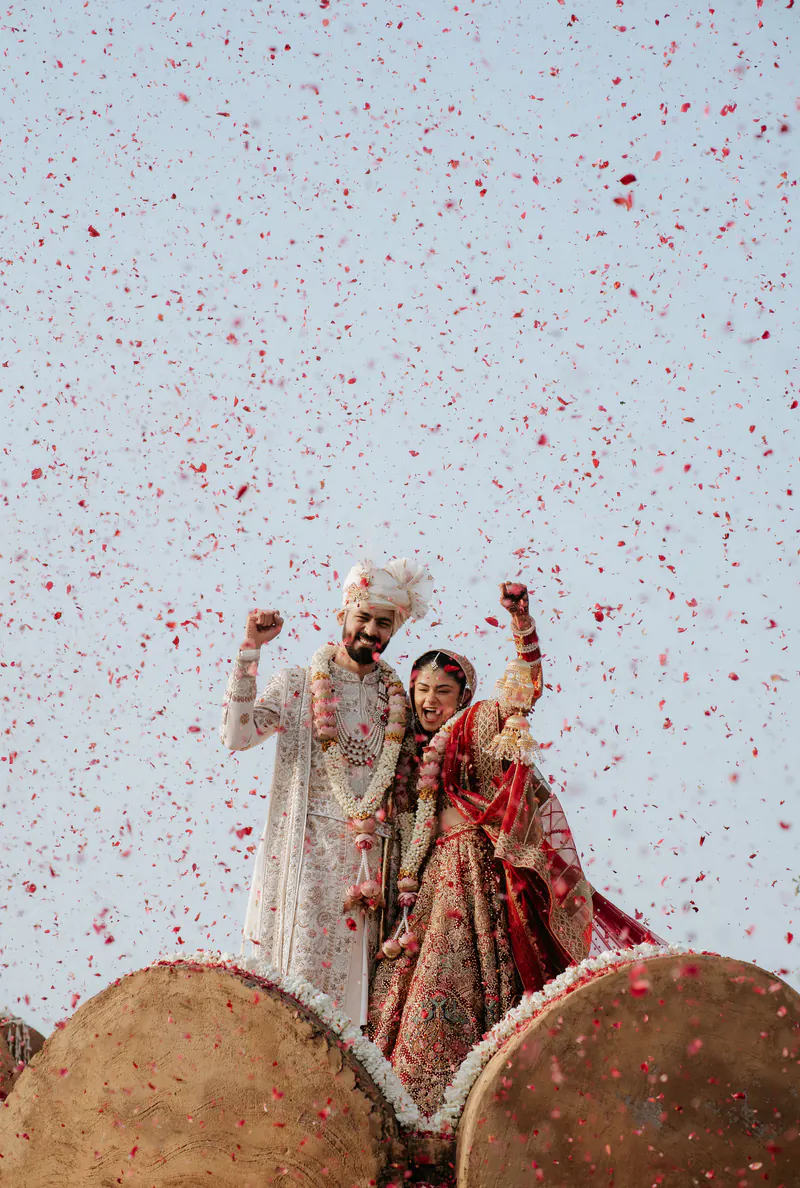
You see your matches and choose. Every profile is verified before it goes live.
- Create your profileFree, in a few minutes
- Matches each morningChosen around your preferences
- Chat when you both say yesOn the Evara app
Free to join
Start free membershipA matchmaker who knows your family searches for you.
- Meet your matchmakerOne person, for your whole search
- Handpicked profilesShortlisted and sent on WhatsApp
- Meetings arrangedWhen both families agree
From ₹51,000
See the matchmaking tiersReal couples. Real families.
These reviews describe our personalised matchmaking service, which families have used since 2012.
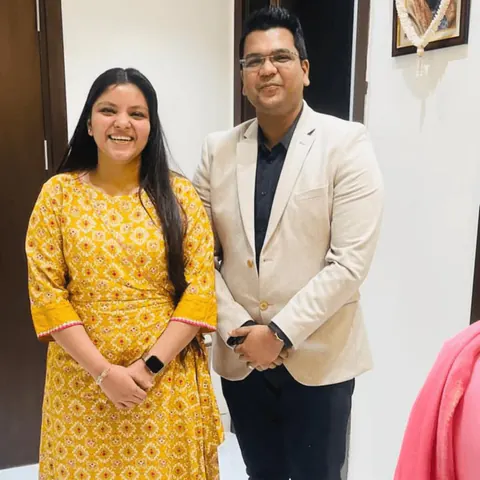
The Evara team truly understood our requirements. The profiles matched our values perfectly.
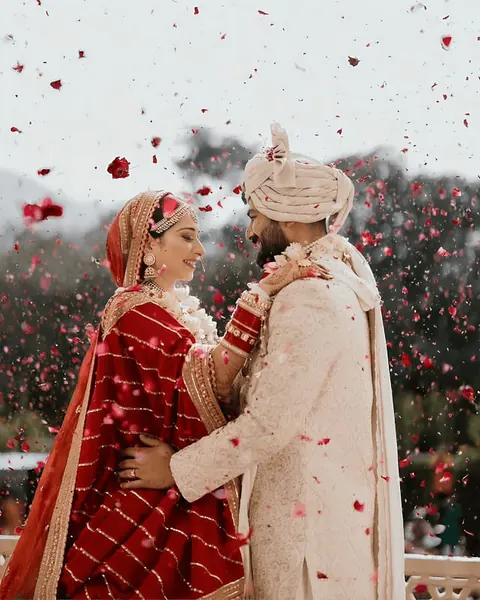
We're forever grateful for helping us find each other. Truly life-changing.
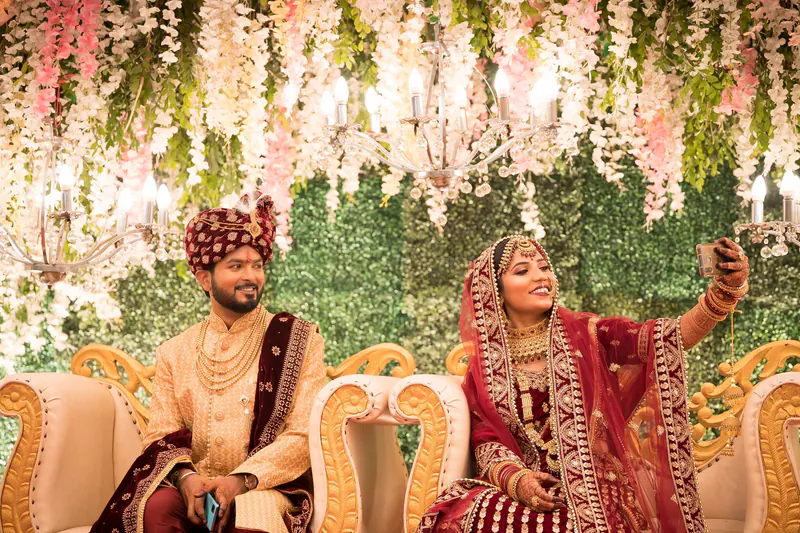
Beginning with a Brahmin marriage bureau in Delhi
Starting in Delhi NCR
A Brahmin family in Delhi NCR can begin with a conversation before anything is paid. Call or WhatsApp +91 93555 66533, Monday to Saturday, 10 AM to 7 PM IST, or come to the office at Netaji Subhash Place in Pitampura, served by the Netaji Subhash Place metro station on the Red Line and the Pink Line. Saturday is a working day at the office, which suits households where both parents work, and families who would rather not travel can hold the first talk on video. Joining is free and stays free; a paid plan is a choice your family makes, if and when it wants one. The one Evara office, its hours and how to book an appointment are on the contact page. Where the office is.
The first conversation is about the brief: your regional community and the language at home, how far beyond them your family will look, the city where the couple may live, and anything that will not bend, such as gotra rules, diet or the kundli. On Select, a named relationship manager keeps that brief, sends profiles shortlisted to your preferences, with regular, considered introductions, and is with you at family meetings in Delhi NCR. Contact details pass between two families only when both agree. Your own checks still matter before a meeting, and our guide on how to verify a matrimony profile sets out what a family can confirm for itself.
What a Brahmin marriage bureau does for your family
How Evara works for Brahmin families
Evara Matrimony is a Brahmin marriage bureau in Delhi, working since 2012 on Brahmin matrimony for families in India and abroad. Tell us your regional community, from Saraswat and Kanyakubja to Iyer and Deshastha, and introductions follow it; gotra and pravara stay with your family. When a family asks us for elite Brahmin matrimony, we read it as a request for a named matchmaker, never a ranking of families, and Select and Reserve provide one. To start, join free, or call or WhatsApp +91 93555 66533, Monday to Saturday, 10 AM to 7 PM IST.
Evara works as a Brahmin marriage bureau in two ways. On membership, a small set of matches chosen for your family arrives each day, and nobody is assigned to you. On Select or Reserve, a named relationship manager learns your family, picks each introduction by hand and tells you why. NRI Brahmin families in the US, the UK, Canada, the Gulf and Australia work with us on video first, and Reserve is the service for a family that wants a senior person reading every introduction. Membership does not include a matchmaker, and the membership page sets out what selection involves and what the Select and Reserve tiers add. Is a matchmaker included.
Matching starts from what your family tells us: the regional community, the language spoken at home, and how far beyond them you will look. Evara matches on community, not on gotra or pravara, so those remain your family’s judgement with each household you consider. What membership, Select and Reserve each cost is set out in the costs section further down this page.
NRI Brahmin families, across time zones
NRI Brahmin matrimony
For NRI Brahmin matrimony the harder problem is often the clock rather than the distance. India keeps one time all year, while much of the diaspora moves its clocks twice a year. New York is 9 hours 30 minutes behind India in July and 10 hours 30 minutes behind India in January. California is 12 hours 30 minutes behind India in July and 13 hours 30 minutes behind India in January. London is 4 hours 30 minutes behind India in July and 5 hours 30 minutes behind India in January. Sydney is 4 hours 30 minutes ahead of India in July and 5 hours 30 minutes ahead of India in January, and Dubai is 1 hour 30 minutes behind India all year.
In practice an evening call from Delhi reaches the US East Coast in its morning, and a late afternoon in Delhi reaches London before its lunch. A call between parents in Delhi or Lucknow and a son or daughter in New Jersey is planned around those windows, and the first meetings between two families are held on video before anyone books a flight.
Reserve adds meetings arranged and coordinated by the Evara team, which matters when neither side can simply drop in on the other. Families abroad also raise questions that families in one city rarely need to: whether the couple will settle in India or overseas, where the wedding will be held, and how the household will keep its observances away from home. These are for the two families to answer, and they are best raised in the first calls rather than after the kundli has been matched. Our page on NRI matchmaking for families abroad explains how the work runs for families living abroad.
A varna spread across a subcontinent
For Brahmin families
Brahmin is one of the four varnas of traditional Hindu society, historically linked with priesthood, teaching, and the keeping of scripture and learning. But to speak of Brahmins as a single group would miss the point that matters most in matchmaking. Over centuries, Brahmin families settled in every part of India, adopted the language of the land they lived in, and grew into distinct regional communities. A family from Tamil Nadu, a family from Maharashtra, and a family from the Gangetic plains may share a varna and still keep quite different mother tongues, kitchens, and rituals.
Tradition itself recognises this spread. Brahmin communities are grouped into two broad geographic divisions, the Pancha Gauda north of the Vindhya range and the Pancha Dravida to its south. That old map still describes something real: for most families, the first question in an alliance is not simply whether the other family is Brahmin, but whether they share a region, a language, and a way of doing things. Our work begins by understanding exactly which of these worlds a family belongs to, and how open they are beyond it.
Regional sub-groups
Many communities, one heritage
The Pancha Gauda division of the north is traditionally counted as Saraswat, Kanyakubja, Gauda, Utkala, and Maithil Brahmins. Kanyakubja Brahmins take their name from the ancient city of Kannauj, historically Kanyakubja, in Uttar Pradesh, while Maithil Brahmins belong to the Mithila region that spans parts of Bihar and Nepal. The Gaur or Gauda and the Saraswat, along with the Sanadhya of the Braj country, are familiar names across North India. Each carries its own family networks and its own memory of where it came from.
The Pancha Dravida division of the south is traditionally counted as the Dravida or Tamil, Andhra, Karnataka, Maharashtra, and Gurjara Brahmins. In Tamil Nadu the community is broadly divided into Iyers, who are largely Smarta and follow Advaita, and Iyengars, who are Vaishnava and follow the Vishishtadvaita of Ramanuja, with the Iyengars further divided into Vadakalai and Thenkalai sub-sects. In Maharashtra the well-known sub-groups include the Deshastha, the Chitpavan or Konkanastha, and the Karhade. Along the western coast, Goud Saraswat Brahmins form a Konkani-speaking community of Goa and coastal Karnataka, and the Havyaka are associated with the Malnad and coastal Karnataka. Bengal has its own Brahmin communities as well. These are matters of identity and family history, not rank, and we treat them that way. No family is above or below another on this page or in our work.
The rules a family observes
Gotra and pravara
For most Brahmin families, gotra is central to how an alliance is considered. A gotra denotes descent from a common patrilineal ancestor, usually one of the ancient rishis, and Hindu custom generally prohibits marriage within the same gotra, a practice known as gotra exogamy. Families often extend the same care to the pravara, the line of ancestral sages associated with a gotra, and many avoid alliances that share a common pravara. In practice this means an introduction has to be checked against these lines before it can go further, and a family that observes these rules closely will not consider a match that breaks them.
Gotra and pravara shape which alliances a family will consider, and families weigh them for themselves. Some families follow the rules strictly. Others follow the gotra rule but are relaxed about pravara, or observe the customs of their particular sub-group and sect. Where a family belongs to a tradition with its own priestly and scriptural heritage, matching well often means finding another family that keeps a similar calendar of samskaras and observances. Getting these details right early saves everyone from an introduction that could never have worked.
How gotra, kundli and family background come into the conversation
Gotra, kundli and family
Families raise these three things in their own order, and nobody should be hurried through them. Gotra is often settled first because it can be settled in a sentence: the two families compare gotras, and some also compare the mother’s gotra, before horoscopes are exchanged. Evara does not screen introductions by gotra, so a family that observes a rule raises it with the other household itself, ideally in the first exchange, before any charts are sent, so that no proposal has to be dropped late.
The kundli usually comes next. Some families want a full match of the two charts, some only want particular doshas ruled out, and some do not match horoscopes at all. On Select, each shortlisted profile is matched on kundali, the one you approve gets a detailed analysis, and you have a consultation with our in-house astrologer when you join. What a match of the charts measures, and what it cannot tell you, is set out in kundli matching explained.
Family background is the longest conversation and the most personal. Families generally want to know where the other family’s roots are, which language is spoken at home, what the parents and siblings do, how the household eats, how observant it is day to day, and whether the couple is expected to live with the parents or on their own. None of these has a single right answer. A good introduction puts the questions that matter to your family early, so that neither side learns something decisive after months of goodwill.
How families think about where to look
Within a region or across
The single most common decision a Brahmin family makes is how wide to search. Many families prefer to match strictly within their own regional sub-group, an Iyer family with another Iyer family, a Deshastha with another Deshastha, a Kanyakubja with another Kanyakubja, so that language, cuisine, and ritual line up naturally. This is often about ease rather than exclusion: a shared mother tongue and a shared way of running a household make two families comfortable with each other quickly.
Other families are open across sub-groups, especially where they have themselves moved cities or generations, or where a common language such as Tamil or Marathi already bridges two communities. Some are open across the whole varna and care most about values, education, and the person. And a growing number of families, particularly among the diaspora, are open to alliances across communities altogether; the same office works with Marwari families, Punjabi and Jain families among others. Our job is to hear exactly where your family sits, whether that is one sub-group, a set of related ones, or a broader brief, and to make introductions that fit it rather than test it.
What Brahmin families ask us first
Questions families ask
Will you only show us families from our own sub-community? Only if that is your brief. If your family says Kanyakubja only, or any Brahmin family from the north, or any family that shares your values, that is how the search runs, and you can widen or narrow it later. Evara does not rank sub-communities, and it does not decide for you which of them count.
Is a second marriage handled differently? The care is the same, and the conversation is often more direct: a previous marriage, and any children, are best stated plainly on both sides from the first call. Our page on second marriage matchmaking for divorced candidates explains how that search runs.
Is a paid matchmaker worth it for us? It depends on how much time your family has, how narrow the brief is, and whether you want someone else to do the first round of checking. We set out the case for and against in is premium matchmaking worth it. Where a family wants a senior person reading every introduction, Reserve adds a senior relationship manager to the search.
A checklist for Brahmin families
Before the first introduction
Six things to agree at home before the search begins. Each one saves a conversation later.
The brief
Write down your regional community, the language at home, and how far beyond them your family will look. Agree it between both parents and the son or daughter first.
Gotra and kundli
Note the gotras your family avoids and whether you match horoscopes, and how strictly. If you do, keep the birth date, time and place ready.
Diet and observance
Say plainly how your household eats and observes, and what you hope for from the other family. It is easier to hear early than late.
Where the couple will live
The city or country, and whether with the parents or on their own. For NRI families, whether a move is expected and by whom.
Your own checks
Decide what you will confirm yourselves before a meeting, such as education and work, and what you will ask the other family to share.
One voice for the family
Name one person to speak for the family and a time of day that suits both homes, especially when the other family lives abroad.
Two routes for a Brahmin family, and what each costs
What it costs
The difference between the two routes is who does the choosing. On membership the matching is algorithmic and every profile is verified before it goes live, and a person approves its photos. On Select and Reserve a named person reads your family and picks every introduction.
Membership
₹999 a month, and nothing at all to join
Matches are chosen for you and a small set arrives each day. Every profile is verified before it goes live, and its photos are approved by a person. Nobody is assigned to your family. Lifetime membership is a single one-time payment with no renewals.
See every membership term and lifetime
Personalised matchmaking
Select from ₹51,000 for 6 months (also ₹75,000 for 12 months or ₹1,00,000 until married)
Reserve is ₹2,51,000 in total, in two parts, with the second part due at a Roka with a family Evara introduced. Luxe is by invitation.
A named relationship manager learns your family, chooses each introduction by hand, gives you the reasoning for it, and is with you at family meetings in Delhi NCR, and on video call across India. Select is the first of these services and Reserve is the senior service above it. Each is bought separately, from the other and from membership.
Lifetime membership is one payment that never renews, and it is priced on its own page. Select and Reserve are priced inclusive of GST, and each is bought on its own. Read the Payment Terms before you pay.
Brahmin matchmaking across India
Where Brahmin families find us
Brahmin families are settled in every region. We serve them where they are.
Other communities we serve
Expanding your search
Many families are open to alliances across communities. Explore matchmaking for:
Guides you may find useful
Guides
On horoscope matching and how matchmaking works:
From the Evara Journal
Read next
One piece from the Evara Journal for a Brahmin family still deciding, on a question this page does not answer:
Brahmin matrimony FAQs
Is Evara a Brahmin marriage bureau in Delhi?
Yes. Evara Matrimony has worked as a marriage bureau from its office in Delhi since 2012, and Brahmin families in Delhi, across India and abroad are among those it serves. Families meet the team in Delhi or on video, then choose between membership and a named matchmaker on Select or Reserve.
How does Evara handle Brahmin regional traditions like Iyer, Iyengar, or Deshastha?
We understand the regional communities within the Brahmin varna, from Iyer and Iyengar in the south to Deshastha, Chitpavan, and Karhade in Maharashtra and Saraswat, Kanyakubja, and Maithil in the north. Evara matches on community. Which regional tradition a family will look beyond is a question it decides for itself.
How does Evara handle gotra and pravara?
Evara matches on community, not on gotra or pravara. Hindu custom generally prohibits marriage within the same gotra, and many families also avoid a shared pravara, but whether a particular alliance clears those is a question that stays with your family.
Can you match across Brahmin regional traditions or across communities?
We can. Many families prefer to stay within their own regional tradition so that language and custom align. Where families are open across sub-groups, or across communities altogether, we look carefully at values, sect, and family expectations before making an introduction.
Common questions
How does Evara handle sect, such as Smarta and Vaishnava or Vadakalai and Thenkalai?
Sect is often as important to a family as regional tradition. Smarta and Vaishnava, and distinctions such as Vadakalai and Thenkalai among Iyengars, are not something Evara records, so they are not part of who is introduced to whom. They stay with your family, and they are worth naming early to your matchmaker and to the families you meet.
Do you offer NRI Brahmin matrimony for families living abroad?
Yes. NRI Brahmin families are settled across North America, the UK, the Gulf, Singapore, and Australia. We regularly connect families in India with relatives and matches settled abroad, and coordinate introductions across time zones with video-first meetings before anyone travels.
Can our family talk to Evara before paying anything?
Yes. Joining is free and stays free. Call or WhatsApp +91 93555 66533, Monday to Saturday, 10 AM to 7 PM IST, or come to the office in Delhi. A paid plan is charged only when your family buys one.
Does Evara do kundli matching for Brahmin families?
On Select, yes, and the kundli section above sets out what that covers, from the shortlist match to the astrologer consultation. Reserve includes everything in Select. How much weight the two charts carry in the decision is for your family to judge.
How do family meetings work when the other side lives abroad?
The first meetings are held on video, at an hour that suits both homes; the time differences for New York, California, London, Sydney and Dubai are in the NRI section above. With a family in North America that usually means an evening in India and a morning there. Travel for an in-person meeting is planned only once both families want one.
Can the son or daughter speak to the other side before the families meet?
Contact details are shared only when both families agree. Once they have, the order of conversations, between the two candidates first or between the parents first, is for the two families to decide.
Is there an elite Brahmin matrimony service?
Evara ranks no Brahmin family or sub-group above another, so the word describes the service, not the family. On Select a named relationship manager chooses each introduction by hand and explains it; Reserve is the senior service above it, and Luxe is by invitation.
What do Brahmin matrimonial services at Evara cost?
Joining is free and stays free. Paid membership is charged monthly, while Select and Reserve, the services with a named matchmaker, are each bought on their own; the current figures sit in the costs section of this page and on the plans page.
Which cities do you cover for Brahmin families?
Brahmin families are spread across the country, and we work nationwide. We are especially active in Delhi, Chennai, Pune, and Lucknow, and match within a city, across regions, or with the diaspora, according to how wide a family wishes to search.
Begin your Brahmin alliance
Free consultation. Every enquiry personally attended to.