Aggarwal matrimony
Aggarwal matrimony from a Delhi marriage bureau
A Delhi marriage bureau matching Agrawal and Aggarwal families across India and abroad.
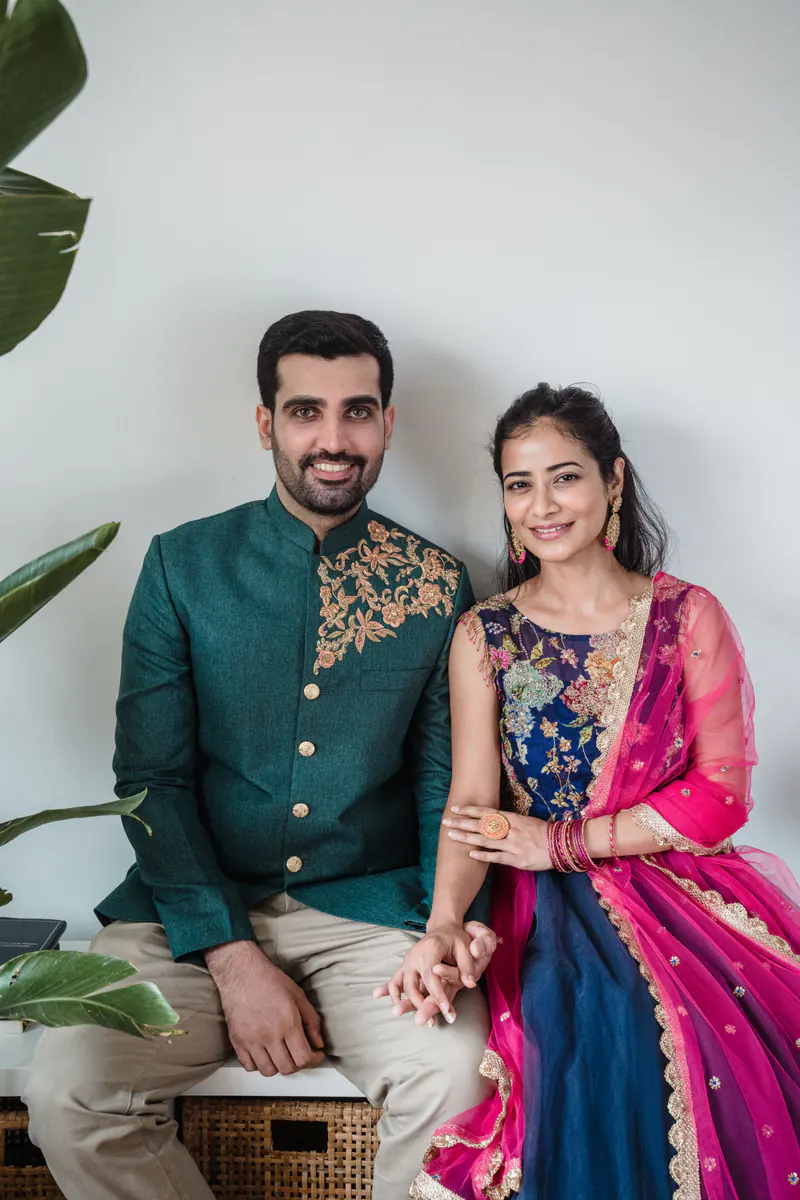
Aggarwal marriage bureau
An Aggarwal marriage bureau, in Delhi and abroad
Aggarwal matrimony for Agrawal families in Delhi NCR, across India and abroad.
The full answer
Evara Matrimony, a marriage bureau running since 2012, handles Aggarwal matrimony for Agrawal families in Delhi NCR, across India and abroad from one Delhi office. Families say whether to stay inside the Agrawal community or look across Bania and Vaishya families, and gotra stays with the household. Joining costs nothing; a named matchmaker on Select is paid separately.
The proof on offer for an Agrawal alliance
What you can check
Three things here you can check for yourself rather than take on our word.
A method the gotra lists force
Regional gotra lists still differ, and the Akhil Bhartiya Agrawal Sammelan had to settle a standard eighteen by a vote in 1983. A matchmaker who assumed would be wrong often. So ours asks: which spelling your family uses, which customs the household actually keeps, whether a Jain alliance is welcome, whether you want to stay inside the Agrawal community or look wider, and how your own family reads gotra, so that we never assume it on your behalf. Asking is the method, and the lists themselves are the reason for it.
One office, and you can sit in it
The practice runs from 117, 1st Floor, NDM-1, Netaji Subhash Place, Pitampura, Delhi-110034. There is no second branch and nobody representing Evara in another city. By appointment only. Call to schedule.
Two names, not a brand
Raynu Garg, Founder and Director, built this practice over fourteen years, and the standard the matchmakers work to is the founder’s own. Anuradha Ghosh, Senior Relationship Manager, is the person who answers when you call. Both names are on the about page, and neither is a placeholder.
- Clients50,000+
- Years14+
How it works.
Three steps, all in the Evara app.
Create your profile
Verified before it goes live.
Receive your matches
Each morning, in the app.
Say hello
Chat opens when you both agree.
Two ways to begin.
On the Evara app, or with a dedicated matchmaker for your family.
You see your matches and choose. Every profile is verified before it goes live.
- Create your profileFree, in a few minutes
- Matches each morningChosen around your preferences
- Chat when you both say yesOn the Evara app
Free to join
Start free membershipA matchmaker who knows your family searches for you.
- Meet your matchmakerOne person, for your whole search
- Handpicked profilesShortlisted and sent on WhatsApp
- Meetings arrangedWhen both families agree
From ₹51,000
See the matchmaking tiersReal couples. Real families.
These reviews describe our personalised matchmaking service, which families have used since 2012.
Within three months we found the most compatible match. The discretion was exceptional.
The entire process was seamless and deeply personal. Thank you, Evara.
Your preferences, and what we can hold
Who this is for
Evara Matrimony, a Delhi marriage bureau for Aggarwal matrimony and rishtey, matches Agrawal and Aggarwal families across India and abroad from one office in Pitampura, North Delhi. On a membership, matches are chosen for you and arrive each day; on Select or Reserve, a named matchmaker chooses every introduction. Gotra stays a judgement for your family. To start, join free, or call or WhatsApp +91 93555 66533, Monday to Saturday, 10 AM to 7 PM IST.
Most Agrawal families arrive here with one question, and it is a practical one: can a bureau actually hold what we ask for. So the honest answer first. The preferences Evara records and works with are community, city and region, age, education, profession, diet, and whether a household follows Vaishnava practice or is Jain. Community is a real one, which means a family can ask to stay inside the Agrawal community, or to open the field to the wider Bania and Vaishya communities such as Maheshwari, Oswal and Marwari families, or to leave community open altogether. Gotra is not on that list. It is the first thing most Agrawal families ask about, so it is answered plainly further down rather than buried.
The work is done in one place. Evara has one office, at 117, 1st Floor, NDM-1, Netaji Subhash Place, Pitampura, Delhi-110034, with no second branch and nobody representing it anywhere else. By appointment only. Call to schedule. That is where the practice sits, not the edge of who it serves: Agrawal families in Delhi, Hisar, Jaipur, Kanpur and Indore work with us by phone, and so do families settled abroad. The desk is open Monday to Saturday, 10 AM to 7 PM IST, and Sunday by appointment. We serve in Hindi and English. Evara has worked with 50,000+ clients, and the practice has run since 2012.
Two limits belong on the first screen rather than in the small print, because they are the two that families find out about late. Evara cannot confirm what a biodata says about a household, and the photo check does not change that. And Evara does not stand between your family and its own gotra judgement, because gotra is not something the product carries at all. Both are set out in full below, under what Evara can confirm.
The order it actually happens in
How it runs
A family calls or writes first, and that conversation starts with what you are looking for rather than with a plan. Anuradha Ghosh, Senior Relationship Manager, is the named line families reach on the phone. If you write instead of calling, we will call you. Nothing is settled in that first conversation. A good number of Agrawal families ring to ask exactly the two questions this page answers, hear the answers, and then take a week over it with the elders before anything else happens.
Then the profile, and it comes before any introduction on either route. Every profile is verified before it goes live, and its photos are approved by a person. That cuts both ways. It is why your own profile takes a little work at the start, and it is why the households put in front of you are not half-finished pages with three fields filled in. The photo check runs at this stage, and what it does and does not establish is set out below in plain words rather than glossed.
Membership matching begins once the profile is complete. Joining Evara is free, and it stays free. You pay for membership in the portal when you buy it. Introductions are chosen for you each day, up to a finite limit. Membership has no outcome fee. Select, Reserve and Luxe begin with a long conversation about your household. A named matchmaker then chooses each introduction and coordinates the meetings. Reserve is paid in two parts, and the second part is due at a Roka with a family Evara introduced. Read the Payment Terms before you pay.
What Evara can confirm, and what stays with you
What we confirm
Start with the photo check, because it is the thing most often misread. An automated check compares the photographs on a profile, and our team looks over anything the check cannot clear. What it establishes is photo consistency. That is the whole of it. It is not proof of identity, and it verifies nothing stated on a biodata: not age, not income, not education, not marital status, not community and not gotra. If a household says it runs a business in Chandni Chowk, or that a daughter finished her degree in a particular year, that is a claim made by that household and not a fact Evara has stood behind. Ask for the paper, read it yourself, and use the profile verification page to see exactly where our check starts and where it stops. What each check establishes, and what it does not, is set out on the profile verification page. How profiles are checked.
Now the question an Agrawal family really came here with. Evara matches on community, not on gotra. Evara does not record gotra on a profile and does not match on it, and gotra is never offered as a filter, as something to look up, or as an input to a match. Where a family follows gotra exogamy, and many Agrawal families do, that judgement stays with the family and with the household it is considering. We would rather say that plainly than let a family assume a lineage rule is being enforced somewhere in the background when it is not. A household that reads gotra strictly loses nothing by saying so at the start, because a matchmaker who has been told will leave the family room to make that call before an introduction goes anywhere.
On privacy the accurate scope is narrow, and we will not widen it to sound better. Membership: only verified Evara members can see your profile, never the public or search engines. Select and Reserve: while your plan is active, your profile is taken out of what members see. Agrawal circles overlap more than most: families meet at the same sammelans, support the same trusts, and attend the same weddings, so a household weighing an alliance often already knows somebody who knows the other side. That is the reason the scope above is stated as narrowly as it is, members rather than the public, with nothing stronger claimed than that.
Distance, money, and what if nothing comes of it
The practical questions
Most of these calls come from a parent or an uncle rather than from the person getting married, and that is the normal shape of an Agrawal enquiry. We are glad to speak to whoever in the family holds the decision, and equally glad to speak to a son or daughter directly where that is how a household prefers to do things. Distance is less of an obstacle than it looks. You do not have to be in Delhi: the office is there for families who want to sit across a desk, and the phone is there for everyone else, including families settled abroad. The desk is open Monday to Saturday, 10 AM to 7 PM IST, with Sunday by appointment.
On money, read the terms before you pay rather than after. Each route is priced on its own page and those pages carry the current figures. Membership gives you more interests to send each day, and more matches, chosen around your preferences, each morning. What Select buys is a named person’s attention and judgement, which is why it costs what it costs and why it is paid from day one. Renewal and the refund position are answered in the questions below and set out in full on the Payment Terms page, whose title is exactly that.
If an introduction feels wrong, tell us why. It may be a city too far away, a practice that does not fit, or a different reading of gotra. We update your preferences from that feedback.
For Agrawal families
A community rooted in Agroha
Agrawal, written by different families as Agrawal or Aggarwal, is one of the older Bania Vaishya communities of northern India. By long tradition it looks back to Maharaja Agrasen, a legendary king remembered as its progenitor, and to Agroha, the town near Hisar in present-day Haryana that inscriptions and texts describe as the community’s original home. That shared story of origin is something most Agrawal families carry, wherever they now live.
Today Agrawal families are settled across Delhi, Haryana, Uttar Pradesh, Rajasthan and Punjab, and well beyond. Historically the community was associated with trade and finance, as Bania communities generally were, but that is only one part of the picture: Agrawal families today are found equally across medicine, law, engineering, teaching, government and the arts. When we describe the community here, we mean its history, its customs, and its way of thinking about marriage, not any single occupation, and certainly not wealth or standing.
Seventeen and a half gotras
The gotra tradition
The feature that shapes Agrawal matchmaking most directly is the gotra. Agrawal gotras are traditionally said to number seventeen and a half, an unusual figure that community accounts explain through the story of Maharaja Agrasen: by one well-known telling he completed seventeen sacrifices and left the eighteenth unfinished, so the community counts seventeen full lineages and one that is spoken of as a half. Widely recognised gotra names include Garg, Goyal, Bansal, Singhal, Mittal, Jindal and Mangal, and many families carry these as surnames as well as gotras.
Because describing any lineage as a half can be read as a slight, the Akhil Bhartiya Agrawal Sammelan, a major community body, adopted a standardised list of eighteen gotras by a vote at its 1983 convention. There has never been complete agreement on the exact names or the count, and regional lists still differ, which is precisely why a matchmaker has to ask rather than assume. These gotras are threads of family history and identity. They are not ranks. No family is above or below another because of the gotra it carries, and we hold to that in every introduction we make.
Why families ask about gotra first
Gotra in family custom
Many Agrawal families follow gotra exogamy, the practice of not marrying within the same gotra. For families who observe it, this is one of the first things checked when an alliance is considered, and some families extend the caution to a mother’s gotra as well as a father’s. Because gotra can be tied to surname, families sometimes rule out a match before a conversation has really begun, simply on the name. Since gotra is not a field on an Evara profile, a family that observes gotra exogamy establishes it directly with the household it is considering.
Not every Agrawal family reads gotra the same way. Some observe the rule strictly, some more loosely, and some are entirely open and care far more about the person and the household than the lineage. Alongside gotra, families often tell us whether they wish to match within the Agrawal community, across the wider Bania and Vaishya communities such as Maheshwari, Oswal or Marwari families, or with families of any community whose values align. We listen for exactly where a family sits on all of this, and we never treat one answer as more correct than another.
The calendar a family keeps
Faith, festivals and institutions
Most Agrawal families follow Vaishnava Hinduism, while a good number are Jain, and the two traditions have long lived side by side within the community. That shared closeness with Jain families matters in matchmaking, because for some Agrawal households a Jain alliance is entirely natural, while others prefer to stay within their own practice. Diwali and the worship of Lakshmi hold a central place in the year for many families, as do the customs each household keeps around its own deities and its home shrine.
The community’s own day is Agrasen Jayanti, the birth anniversary of Maharaja Agrasen, observed on the fourth day of the Ashwin month of the Hindu calendar. It is a gazetted holiday in Haryana and Punjab, and Uttar Pradesh has also declared a holiday for it, so for many families it is a fixed and public marker of belonging. The Government of India issued a postage stamp in honour of Maharaja Agrasen in 1976, a measure of how widely the tradition is recognised. Around these occasions, and through the sammelans and community trusts that Agrawal families have long supported, families meet, and many alliances begin in exactly these circles. We work with that grain rather than against it.
Surname, region, and where a family draws its line
Threads a family carries
Three things Agrawal families raise with us again and again, none of them a ranking.
Surname and lineage
Agrawal surnames such as Garg, Goyal, Bansal, Singhal, Mittal, Jindal and Mangal each trace back to a gotra, which is why a surname reads as family history rather than as a label.
Within or across the community
Match strictly within the Agrawal community, or across the wider Bania and Vaishya communities, or open on community entirely. We follow your family, not a template.
Reach across North India
Agrawal families are settled across Delhi, Haryana, Uttar Pradesh, Rajasthan and Punjab. We connect households across the region and with the diaspora when a family asks.
Two ways an Agrawal family can work with Evara
What it costs
The difference that matters is who does the choosing. Settle that, and the price follows from it.
Membership
₹999 a month, and joining is free
The choosing is algorithmic. Matches are chosen for you and arrive each day, and nobody is assigned to your household. A person still approves every photo before it appears. Lifetime works the same way, as a one-time term rather than a monthly one. Community is a preference this matching honours. Gotra is not. Membership does not include a matchmaker, and the membership page sets out what selection involves and what the Select and Reserve tiers add. Is a matchmaker included.
A matchmaker of your own
Select from ₹51,000 for 6 months (also ₹75,000 for 12 months or ₹1,00,000 until married)
Reserve is ₹2,51,000 in total, in two parts, with the second part due at a Roka with a family Evara introduced. Luxe is by invitation.
The choosing is human. A named relationship manager sits with your family, learns which Agrawal customs your household keeps and which it is relaxed about, then chooses each introduction by hand and is with you at family meetings in Delhi NCR, and on video call across India. Select is the entry to it and Reserve is the senior service above it. Each is bought separately, from the other and from a membership.
How Select and Reserve are priced
Lifetime and the 3, 6 and 12 month membership terms are all set out on the membership page. Select and Reserve are priced inclusive of GST, and the Payment Terms page carries the refund position in full.
Joining is free. Membership is ₹999 a month. A matchmaker of your own is a separate service, paid from day one. Hours and appointments: where the office is.
Evara publishes a client story only when the family has given written consent, and no consented story for an Agrawal family search is published yet. What you can check today is the office, the named people who answer the phone, and the process on this page.
The pages that carry the scope and the terms
Where the detail lives
Everything this page states in prose is set out at length on one of these. The verification scope and the payment terms are the two worth reading before you pay.
Agrawal matchmaking across North India
Where Agrawal families find us
Agrawal families are settled across the north and west. We serve these cities and more.
Related communities we serve
Expanding your search
Many families are open to alliances across the wider Bania and Vaishya communities. Explore matchmaking for:
From the Evara Journal, and one page for business families
Read next
Two pieces from the Evara Journal for an Aggarwal family still deciding, each answering a question this page does not:
Tell us what your family is looking for
One conversation about your preferences, and we will say which of the two routes fits. Membership pricing sits on the membership page, and Select and Reserve on theirs.
Aggarwal matrimony FAQs
Is Evara a marriage bureau for Aggarwal families in Delhi?
Yes. Evara Matrimony is a marriage bureau run from one office in North Delhi, and Aggarwal and Agrawal families from Delhi and the NCR, from Haryana, Rajasthan and Uttar Pradesh, and from abroad work with it. The first conversation is usually with a parent. From there a family chooses between matches chosen for it each day and a named matchmaker of its own.
Can we find Aggarwal rishtey on Evara without a matchmaker?
Yes. On membership, suitable profiles are chosen for you by the system and arrive each day, a person looks at every profile before it appears, and nobody is assigned to your family. You keep the community preference you set, inside the Agrawal community or across the wider Bania and Vaishya communities, and your family weighs gotra itself.
What does Evara not check?
An automated photo check compares the photographs on a profile and our team looks over anything it cannot clear, which establishes photo consistency and nothing more. It is not proof of identity, and it confirms nothing a biodata states: not age, income, education, marital status, community or gotra. Ask each household for the documents that matter to your family and read them yourself. The profile verification page sets out the exact scope of our check.
How does Evara handle gotra when matching Agrawal families?
Evara matches on community, not on gotra. Many Agrawal families follow gotra exogamy, and where they do, that judgement stays with the family and its own traditions rather than being made on its behalf. Gotra is not a field we hold, a thing to look up, or an input to a match, and a matchmaker will ask how your family reads it rather than assume.
Common questions
Can Evara really hold our preferences, or is that just what the page says?
The ones the product carries, yes. Community is a real preference, so you can ask to stay inside the Agrawal community, to open the field to the wider Bania and Vaishya communities, or to leave community open. City and region, age, education, profession, diet, and whether a household follows Vaishnava practice or is Jain are all recorded and worked with. Gotra is not one of them, and the next answers explain why.
Who chooses the matches, a person or the platform?
It depends on what you buy, and this is the real difference between the two routes. On a membership, and on lifetime, the choosing is algorithmic: introductions are chosen for you and arrive each day, nobody is assigned to your household, and a person still approves every photo before it appears. On Select, Reserve and Luxe the choosing is human: a named matchmaker reads your family and picks each introduction by hand. Select and Reserve are each bought separately from a membership. Select is paid at the start, and Reserve in two parts, the second at a Roka with a family Evara introduced. Luxe is by invitation.
What does it cost, and when does payment start?
Joining Evara is free, and it stays free. You pay for membership in the portal when you buy it. Lifetime and the 3, 6 and 12 month terms are alternatives to the monthly rung and are set out on the membership page. Select and Reserve are separate purchases, each on its own page. Select is paid at the start, for 6 months, 12 months or until you are married. Reserve is one fixed total in two parts, with the second part due at a Roka with a family Evara introduced. Luxe is by invitation.
Does a membership renew, and can we get a refund?
A monthly membership renews until you switch renewal off. The 3, 6 and 12 month terms and lifetime do not renew at all. Switching renewal off keeps your membership open to the end of the term you have paid for. On refunds, all payments are final and non-refundable, including unused periods, voluntary cancellation, or if you do not find a match. Duplicate charges, failed transactions and amounts charged in error are refunded to the original method. The Payment Terms page holds the full text. Evara promises no outcome, and the refund rule that follows from it is on the payment terms page. If no match is found.
We are not in Delhi. Does that work?
It does. There is one office, in Pitampura in North Delhi, and it is where the work is done rather than a boundary on who we work with. Agrawal families across India and abroad speak to us by phone, and families who want to sit across a desk come in by appointment. Desk hours are Monday to Saturday, 10 AM to 7 PM IST, and Sunday is by appointment. We serve in Hindi and English.
What if no match comes of it?
Membership has no outcome fee. On Reserve, the second part is due only at a Roka with a family Evara introduced. Read the Payment Terms before you pay. If an introduction feels wrong, tell us why. It may be the distance, a family practice, or a different reading of gotra. We update your preferences from that feedback.
What is the seventeen and a half gotra tradition?
Agrawal gotras are traditionally said to number seventeen and a half. Community accounts link this to Maharaja Agrasen, who by one telling completed seventeen sacrifices and left the eighteenth unfinished. Because calling any lineage a half can seem a slight, the Akhil Bhartiya Agrawal Sammelan adopted a standardised list of eighteen gotras in 1983. Lists still differ by region, which is why we ask rather than assume.
Do you match only within the Agrawal community, or across communities?
Both, exactly as a family wishes. Some families prefer to match strictly within the Agrawal community. Others are open across the wider Bania and Vaishya communities, such as Maheshwari, Oswal and Marwari families, and some are open on community entirely. We ask about this early and treat every answer with equal respect.
Can you match Agrawal and Jain families?
We can. Most Agrawal families follow Vaishnava Hinduism and a good number are Jain, and the two have long lived side by side in the community. Some households see a Jain alliance as entirely natural, while others prefer to stay within their own practice. We look carefully at custom and values before making any such introduction.
Which regions do your Agrawal families come from?
Agrawal families are settled across Delhi, Haryana, Uttar Pradesh, Rajasthan and Punjab, with roots that many trace back to Agroha near Hisar. We work across all these regions, and coordinate introductions with your home city or with the diaspora when a family asks.
Is a family judged by its gotra or surname on Evara?
No. Gotras and surnames are threads of family history and identity, not ranks. No family is above or below another because of the lineage it carries. Evara does not rank or sort anyone by gotra or by surname.
Begin your story.
On the Evara app, or with a dedicated matchmaker for your family.