Sikh matrimony
Sikh matchmaking and rishtey for the Anand Karaj
Sikh rishtey for families who want the faith at the centre.
Matchmaking that keeps the faith in view
The faith comes first
We profile for how a family keeps the faith, from daily practice to reverence for the Guru Granth Sahib, so an introduction rests on shared ground that lasts.
Observance, understood
We ask early whether a family is amritdhari, keshdhari, or sahajdhari in how it lives, and match with care for that, never as a ranking, only as a matter of fit.
Sikh communities, with respect
Jat Sikh, Ramgarhia, Khatri and Arora Sikh, Ahluwalia, and other families are matched as identity and family history, within a community or across it, exactly as you prefer.
Verified profiles
Every profile is verified before it goes live, and its photos are approved by a person. On Select or Reserve a matchmaker curates each introduction. What each check establishes, and what it does not, is set out on the profile verification page. How profiles are checked.
Why Evara for Sikh families
Fourteen years of matching Sikh families in India and abroad has taught us where the considerations that matter actually lie.
A global network
The Sikh diaspora is large in Canada, the United Kingdom, the United States, and Australia. We connect families in India with Sikh families settled abroad, and the other way around.
Discretion, always
Sikh communities are close-knit and news travels quickly. Membership: only verified Evara members can see your profile, never the public or search engines. Select and Reserve: while your plan is active, your profile is taken out of what members see.
How it works.
Three steps, all in the Evara app.
Create your profile
Verified before it goes live.
Receive your matches
Each morning, in the app.
Say hello
Chat opens when you both agree.
Two ways to begin.
On the Evara app, or with a dedicated matchmaker for your family.
You see your matches and choose. Every profile is verified before it goes live.
- Create your profileFree, in a few minutes
- Matches each morningChosen around your preferences
- Chat when you both say yesOn the Evara app
Free to join
Start free membershipA matchmaker who knows your family searches for you.
- Meet your matchmakerOne person, for your whole search
- Handpicked profilesShortlisted and sent on WhatsApp
- Meetings arrangedWhen both families agree
From ₹51,000
See the matchmaking tiersReal couples. Real families.
These reviews describe our personalised matchmaking service, which families have used since 2012.
Within three months we found the most compatible match. The discretion was exceptional.
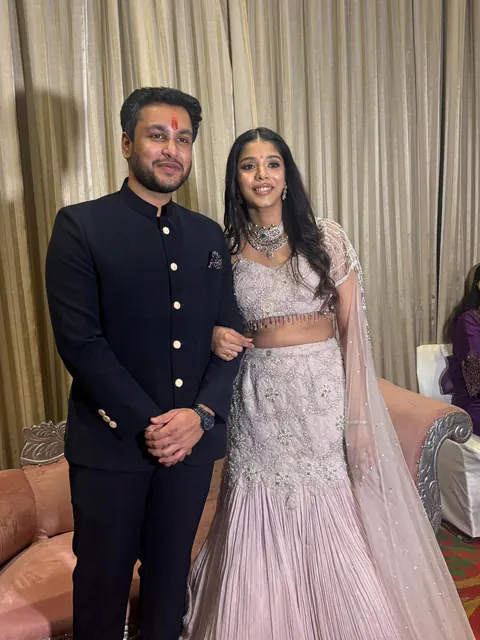
The entire process was seamless and deeply personal. Thank you, Evara.
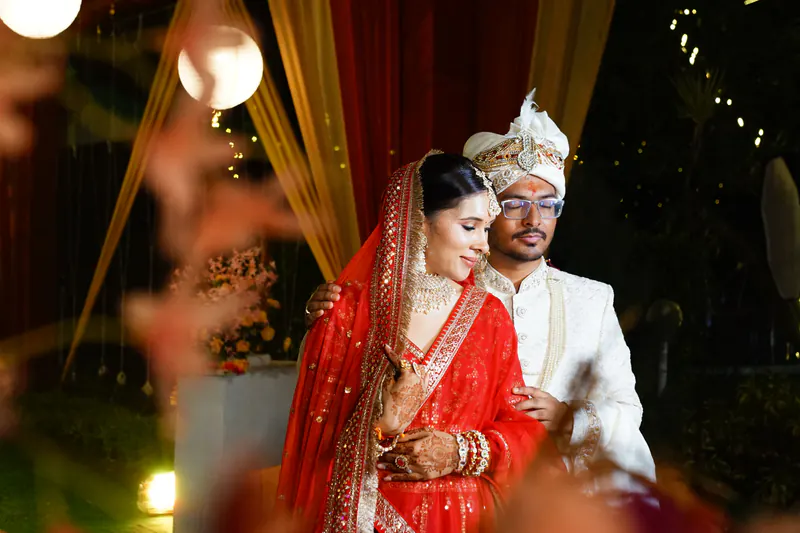
Sikh rishtey, and Anand Karaj matchmaking
Sikh matchmaking
Evara Matrimony arranges Sikh rishtey for families who want the faith at the centre and an Anand Karaj at the end, in Delhi, Punjab, across India and abroad. On membership, suitable profiles are chosen for you each day. On Select or Reserve, a named matchmaker learns how your household keeps the faith and chooses each introduction by hand. Joining is free. To talk first, call or WhatsApp +91 93555 66533, Monday to Saturday, 10 AM to 7 PM IST.
A Sikh marriage is an alliance made before the Guru Granth Sahib, and for many families the faith comes before region or language. We work from one office in North Delhi, in Hindi or English, with parents in the conversation from the first call, and for over 14 years Evara has helped Sikh families in India and across the diaspora find people who share that faith. Both routes are priced just below; on membership nobody is assigned to your family, and the membership page sets out what Select and Reserve add.
The first call is about the faith before anything else. We ask whether the household is amritdhari, keshdhari or sahajdhari, whether uncut hair and a turban matter in a groom, or kesh in a bride, where the family expects the Anand Karaj to be held, and whether a Punjabi Hindu household would be welcome. Jat Sikh, Ramgarhia, Khatri, Arora and Ahluwalia families tell us how widely they want to look, and we follow that rather than a template. The history and practice behind those questions come after the prices, for any family that wants to read them.
A faith, not only a background
For Sikh families
Sikhi is a distinct religion with its own founder, scripture, and practice, and that is where matchmaking for Sikh families begins. The faith was founded by Guru Nanak, born in 1469, the first of ten Gurus whose teachings shape how a Sikh family lives, marries, and raises children. To match well for a Sikh family is to understand that the shared ground a family is looking for is spiritual before it is regional or linguistic.
This is why the Sikh page stands on its own. Many Sikh families are Punjabi by language and heritage, and much of our Punjabi work overlaps, but Sikhi is followed by families with roots well beyond Punjab, and a Sikh family’s brief usually turns on the faith first: how it is kept at home, which ceremonies matter, and whether a match will carry the same reverence for the Guru Granth Sahib into the next generation.
Ten Gurus, and the eternal Guru
The Gurus and the scripture
The line of Sikh Gurus runs from Guru Nanak through nine successors, each carrying the same teaching forward. Guru Ram Das, the fourth Guru, founded the city of Amritsar and composed the lavaan, the hymns at the heart of the Sikh wedding. Guru Arjan, the fifth Guru, compiled the first scripture and oversaw the building of the Harmandir Sahib. Guru Gobind Singh, the tenth Guru, gave the community its lasting form.
In 1708 Guru Gobind Singh closed the line of human Gurus and installed the Guru Granth Sahib as the eternal Guru of the Sikhs. For a Sikh family this is not history at a distance. The Guru Granth Sahib presides over the home’s important moments and over the wedding itself, and a shared reverence for it is often the first thing two families recognise in each other. When we profile a Sikh family, we listen for exactly that: how central the Guru and the daily practice of the faith are to the life a family hopes to build.
The Khalsa, the five Ks, and the gurdwara
The Khalsa and daily practice
On Vaisakhi in 1699, at Anandpur Sahib, Guru Gobind Singh inaugurated the Khalsa and gave initiated Sikhs the five Ks: kesh, uncut hair; kangha, a comb; kara, a steel bracelet; kachera, a cotton undergarment; and kirpan, a sword. He also gave the names Singh and Kaur, carried by Sikhs to this day. These are articles of faith and identity, not fashion, and families differ in how they keep them, which is a real and respectful part of any conversation about a match.
The gurdwara is the centre of community life, and at every gurdwara the langar, a free kitchen, serves anyone who comes, regardless of who they are or where they are from. That principle of equality runs through the faith and, quietly, through matchmaking too. The Harmandir Sahib in Amritsar, the Golden Temple, is the holiest gurdwara and the spiritual heart of the Sikh world. Many families hope their children will carry the same connection to it, and we hold that in mind when we understand what a family is really looking for.
Families within the faith
One faith, many families
Sikh families come from several communities, and good matchmaking begins by respecting each as identity rather than rank. Among them are Jat Sikh families, Ramgarhia families, Khatri and Arora Sikh families, Ahluwalia families, and others besides. These distinctions are matters of ancestry and family history, and some families observe them closely in marriage while others do not. No family is above or below another on this page or in our work, and we would not frame it any other way. Our page on Khatri matchmaking covers how we approach a search for Hindu and Sikh Khatri families.
Alongside community, families differ in observance. Some are amritdhari, having taken amrit and formally joined the Khalsa, and keep the five Ks fully. Others are keshdhari or sahajdhari, keeping the faith in their own measure. A match often turns on whether both sides live the faith in a similar way, and this, too, is a question we raise gently and early, so that an introduction fits a family from the very first conversation rather than surfacing a mismatch later.
The Anand Karaj, at home and across the world
The wedding, and a faith abroad
The Sikh wedding is the Anand Karaj, the ceremony of bliss, solemnised before the Guru Granth Sahib. Its heart is the four lavaan, the hymns composed by Guru Ram Das and read from the Guru Granth Sahib as the couple circles it once for each verse. The Anand Karaj is recognised in law under the Anand Marriage Act of 1909, and the 2012 amendment added provision for registering such marriages, which matters for later documentation such as visas or a change of name. We are not lawyers and point families to official sources for the formalities, but the ceremony has clear legal standing.
Few faiths travelled as widely. The Sikh diaspora is large in Canada, where Punjabi is among the most widely spoken languages, and across the United Kingdom, the United States, and Australia. A family in India seeking a match settled abroad, or a family in Toronto, London, or Melbourne wishing to marry back into the faith, is one of the most common searches we handle. Matching across the diaspora asks for the same care as matching at home, plus an honest conversation about where a couple will settle, which customs a family raised abroad still keeps, and how to coordinate two households in different time zones. We meet families video-first so both sides can meet properly before anyone travels, and plan in-person meetings around visits home and festivals such as Vaisakhi.
Two routes for a Sikh family, and what each costs
What it costs
The difference between the two routes is who does the choosing. On membership the matching is algorithmic and every profile is verified before it goes live, and a person approves its photos. On Select and Reserve a named person reads your family and picks every introduction.
Membership
₹999 a month, and nothing at all to join
Matches are chosen for you and a small set arrives each day. Every profile is verified before it goes live, and its photos are approved by a person. Nobody is assigned to your family. Lifetime membership is a single one-time payment with no renewals.
See every membership term and lifetime
Personalised matchmaking
Select from ₹51,000 for 6 months (also ₹75,000 for 12 months or ₹1,00,000 until married)
Reserve is ₹2,51,000 in total, in two parts, with the second part due at a Roka with a family Evara introduced. Luxe is by invitation.
A named relationship manager learns your family, chooses each introduction by hand, gives you the reasoning for it, and is with you at family meetings in Delhi NCR, and on video call across India. Select is the first of these services and Reserve is the senior service above it. Each is bought separately, from the other and from membership.
Lifetime membership is one payment that never renews, and it is priced on its own page. Select and Reserve are priced inclusive of GST, and each is bought on its own. Read the Payment Terms before you pay.
Sikh matchmaking across India
Where Sikh families find us
Sikh families are settled widely. We work across the capital region, Punjab, and beyond.
Related communities and services
Expanding your search
Some Sikh families look for an alliance within the wider Punjabi heritage, some look further, and some need support with a match abroad. Explore:
From the Evara Journal
Read next
Two pieces from the Evara Journal for a Sikh family still deciding, each answering a question this page does not:
Sikh matrimony FAQs
What is the Anand Karaj, and is a Sikh marriage legally recognised?
The Anand Karaj is the Sikh wedding, solemnised before the Guru Granth Sahib around the four lavaan composed by Guru Ram Das. It is recognised in law under the Anand Marriage Act of 1909, and the 2012 amendment added provision for registering such marriages, which helps with later documentation. We are not lawyers and point families to official sources for the formalities, but the ceremony has clear legal standing.
Do you match within specific Sikh communities?
Yes. Jat Sikh, Ramgarhia, Khatri and Arora Sikh, Ahluwalia and other families each carry their own history, and Evara matches on community, within one when a family wishes or across communities when a family is open to it. We treat these as identity and family history, never as rank, and ask about them early so introductions fit from the start.
How do you handle differences in how families keep the faith?
We ask, gently and early, whether a family is amritdhari, keshdhari, or sahajdhari in how it lives, and whether the five Ks are kept. Many matches turn on both sides observing the faith in a similar way. We factor this into every introduction so nothing that matters to a family comes as a surprise later, and we never treat one form of observance as above another.
Do you serve Sikh families living abroad?
Yes. The Sikh diaspora is large in Canada, the United Kingdom, the United States, and Australia. We regularly connect Sikh families in India with families settled abroad, and the other way around, coordinating introductions across time zones with video-first meetings. Our NRI matchmaking service supports families through the practical side of a match spanning countries.
Common questions
Can you match Sikh families with families from related communities?
Many Sikh families prefer to match strictly within the faith, and we respect that fully. Where a family is open to a wider search across its Punjabi or Khatri heritage, we look carefully at whether values, customs, and the place the faith holds in daily life align before making any introduction.
Is Amritsar or the Golden Temple part of what families look for?
For many families, a shared connection to the faith includes reverence for the Harmandir Sahib, the Golden Temple in Amritsar, the holiest gurdwara. It is rarely a formal requirement, but it often reflects how central the faith is to a family, which is exactly the kind of shared ground we listen for when we understand what a family is really seeking.
Do you arrange Sikh rishtey in Delhi and Punjab?
Yes, and abroad. Evara works from one office in North Delhi, and Sikh families in Delhi, Chandigarh and across Punjab, elsewhere in India and in the diaspora work with it by phone, on video, or at the office by appointment. Many Delhi families have relatives in Canada or the United Kingdom, so an introduction often spans both, and we plan meetings around visits home.
Is Evara a Sikh matrimony site or a matchmaking service?
It offers both routes, and the difference is who chooses. On membership, suitable profiles are chosen for you each day, a person looks at every profile before it appears, and nobody is assigned to your family. On Select or Reserve, a named matchmaker learns how your household keeps the faith and picks every introduction by hand, then helps the two families meet.
What does Sikh matchmaking with Evara cost?
Joining is free. Membership is priced by the month, with longer terms and lifetime set out on the membership page, and Select and Reserve, the Personalised matchmaking tiers, are each priced on their own page. The cost section near the top of this page shows both routes with their current figures. Payments are final, so read the Payment Terms before you pay.
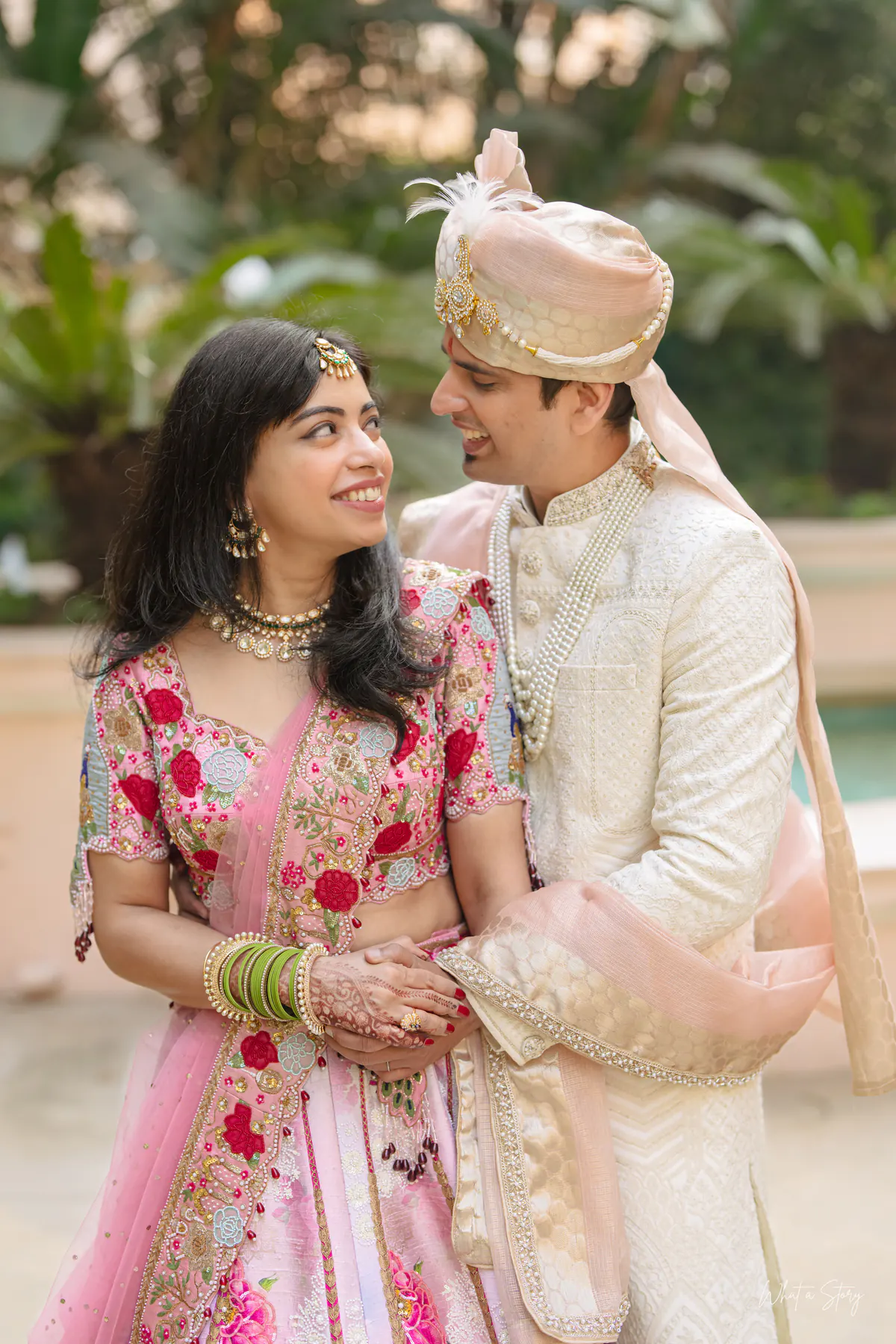
Begin your Sikh alliance
Free consultation. Every enquiry personally attended to.