Divorced Rishtey
Divorce rishtey: a second marriage bureau for divorced men and women
Matrimonial services for divorced men and women considering a second marriage.

Second Marriage
A marriage bureau for second marriage
Second marriage matchmaking since 2012, for divorced men and women in Delhi and abroad.
The full answer
Evara Matrimony, a marriage bureau matching families since 2012, runs second marriage matchmaking for divorced men and women in Delhi and abroad. Matches are chosen for you and a person checks every profile. The decree and any children are raised with the other family at the start, and on Select or Reserve a named matchmaker has that conversation.
Proof you can check today
What You Can Check
Nothing here asks you to take a story on trust. These are the things you can confirm before you pay anything.
One office, by appointment
117, 1st Floor, NDM-1, Netaji Subhash Place, Pitampura, Delhi-110034. By appointment only. Call to schedule. There is one office and that is it, so you can see where the practice sits before you commit to anything.
Two named people
Raynu Garg, Founder and Director, built this practice over fourteen years. Anuradha Ghosh, Senior Relationship Manager, is the named line families reach on the phone: +91 95992 94931. Those are the only two names on this page, and both of them answer for it.
A documented first conversation
The four questions above are the method rather than a script written for this page. Asking where the decree stands and what the arrangement for children is at the first call is exactly what stops a promising introduction collapsing at the fourth meeting.
The scope, written down elsewhere
What the photo check does and does not establish is set out on the Profile Verification page. What is refundable and what is not is set out under Payment Terms. Neither is summarised generously here, and both are linked at the foot of this page.
- Clients50,000+
- Years14+
How it works.
Three steps, all in the Evara app.
Create your profile
Verified before it goes live.
Receive your matches
Each morning, in the app.
Say hello
Chat opens when you both agree.
Two ways to begin.
On the Evara app, or with a dedicated matchmaker for your family.
| Membership | Personalised matchmaking | |
|---|---|---|
| Who leads | You, on the Evara app. | A dedicated matchmaker. |
| Included | Verified matches each morning; chat when you both agree. | A shortlist, and introductions arranged. |
| Price | Free to join | From ₹51,000 |
| Start free membership | See the matchmaking tiers |
Real couples. Real families.
These reviews describe our personalised matchmaking service, which families have used since 2012.

Forever grateful for your dedication throughout our journey. Truly a wonderful experience.
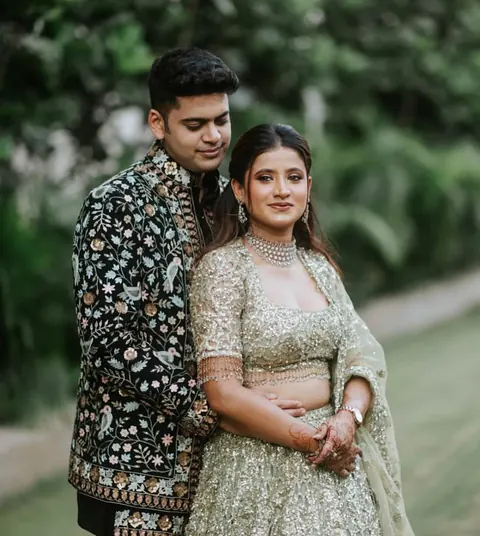
A heartfelt thank you for your company throughout this beautiful journey.

A second search, on honest terms
Who It Is For
Matrimonial services for divorced men and women considering a second marriage, and for anyone open to a partner who has been married before. Evara has matched families since 2012 from one office in Pitampura, North Delhi. Introductions are chosen for you and every profile is checked by a person. To start, call or WhatsApp +91 93555 66533, Monday to Saturday, 10 AM to 7 PM IST, or create a free profile. Evara is a matchmaking service and not a legal adviser.
Divorce rishtey, as this matrimonial service uses the words, is for people whose first marriage ended and who are weighing a second one. Some have a decree that is weeks old and some have carried it for years. Some have children at home, some have children living elsewhere, and some have none. Evara also works with men and women who have not been married before and are open to a partner who has. A marriage that ended is a chapter and not a verdict, and nobody here will ask you to explain it away.
There is one office, at 117, 1st Floor, NDM-1, Netaji Subhash Place, Pitampura, Delhi-110034. By appointment only. Call to schedule. The desk is open Monday to Saturday, 10 AM to 7 PM IST. That address is where the practice is run from rather than a boundary drawn around who it serves: the first conversation happens on the phone, and a meeting between two families is arranged by video when the two sides sit in different cities. Evara has worked with 50,000+ clients and has 14+ years behind it. Service is in Hindi and English.
Two limits belong on this first screen rather than three screens down. Evara is a matchmaking service and not a legal adviser, so the status of a divorce, maintenance and custody are matters on which your family must take its own legal advice, and this page gives no opinion on any of them. There is also a limit on how many introductions reach you, because a second search works better narrow than wide. Matches are chosen for you here rather than assembled by you.
The process, and when service begins
How It Runs
It starts with one conversation, on the phone or at the office by appointment. Nobody asks you to justify the past. We ask four plain things: where the decree stands, whether there are children and what the present arrangement is, what you want a second marriage to look like, and who in your family is part of the decision. That conversation is confidential and it commits you to nothing.
On membership, service begins when your profile is finished and cleared. Every profile is reviewed by our team and must be complete before it can be shown or seen. After that the matches arrive each day, chosen for you, and you decide which of them to take forward. On Select, Reserve or Luxe, service begins on the day the fee is paid: a named matchmaker takes the brief, and introductions come one at a time with a reason attached rather than as a list. What each check establishes, and what it does not, is set out on the profile verification page. How profiles are checked.
On children, the honest account is short. Evara cannot make another family welcome yours and does not promise to. What it can do is establish at that first conversation that both sides know the position, how many children there are, where they live and what the arrangement is now, so that nothing surfaces as a shock at the fourth meeting and nobody spends months on a match that was never going to work. It is a plain protection of your time and of theirs, and it is worth more than a reassurance.
On readiness there is no correct interval, and nobody here will name one for you. A workable test is three questions you can answer on your own. Can you describe what ended without it taking over the conversation. Do you know what you would want different this time. Are the people who depend on you ready for someone new in the house. Two clear answers out of three is usually enough to begin. Fewer is a reason to wait, and waiting is a decision rather than a failure.
What is checked, and who sees you
Verification and Privacy
Privacy is usually the first question a second marriage raises, so here is the scope, stated narrowly and not stretched. A profile is shown to other Evara members and not to the public or to search engines. Evara does not reveal a member’s phone number or email address; members share their own details in a conversation if they choose. Every profile is checked by a person before it appears, which is human work and is the reason a half-finished profile does not go live.
The photo check needs stating precisely, because it is the thing families most often read too much into. An automated check compares the photographs on a profile, and the team looks at anything the check cannot clear. What it establishes is photo consistency. It is not proof of identity, and it verifies nothing written on a biodata: not age, not income, not education, not marital status, not community and not gotra.
For a second marriage that last point carries more weight than usual. A photo check cannot tell you that a decree exists, or that it is final, or what a custody order says. Only the documents do that, and you are entitled to ask the other family to see them, exactly as they are entitled to ask you. Evara is not a legal adviser and will not read a decree for you. The profile verification page sets out the scope of the check in full.
What your profile says, and when it is said
Disclosure
A second search raises a question a first search rarely does: who learns what about you, and at what point. On Evara the answer comes in stages. Your profile is shown to other Evara members, and not to the public or to search engines. You can choose to show a short version of it, with your first name, age, city, religion and community, and keep your photographs and the rest of your details hidden until you and the other member have both shown interest. Your phone number and email address are never revealed by Evara; you share them yourself, in a conversation, when you decide to.
What should be on the profile from the first day is your marital status, and whether you have children. Say it plainly: divorced or widowed, and if there are children, how many and who they live with. The detail of a custody arrangement can wait for a conversation; the fact of the children should not. A profile that leaves this out tends to get interest that ends as soon as the truth arrives, and that costs both families time they would rather have spent elsewhere.
On Select and Reserve the staging is done for you. A named relationship manager puts the position on your decree and your children to the other family before a meeting is arranged, every family introduced is verified by the team on a video call, and contact details are shared only when both families agree. In Delhi NCR your relationship manager can be with you at the family meeting itself. The practical difference between the two routes is who chooses the moment to say it: on membership that is you, and on a matchmaker-led plan it is said for you before anyone meets.
Community is a separate question from marital history, and many families keep it on the brief the second time. Evara matches on community, so a family looking for a Khatri match for a divorced son or daughter, or a Brahmin match after a first marriage ended, says so on the first call, as does a family that has decided to widen the circle this time. Where you live changes the first meeting rather than the method: a family in Noida or elsewhere in Delhi NCR can come to the office by appointment, and a family further away starts on the phone. For the search seen from the candidate’s side, read our guide to second marriage matrimony.
Documents
The papers a family may ask to see
Once two families are serious, it is ordinary and reasonable for each to ask to see documents, and it works best when it goes both ways. Evara does not collect or check them, and what follows is general information rather than legal advice on anyone’s own case. Our family checklist for verifying a matrimony profile covers the wider checks on work, education and family.
For a divorced person, the document is the decree of divorce passed by the court, and a certified copy can be obtained from the court that passed it. A petition that is still pending, a separation agreement or a settlement signed by both sides is not a decree. In a divorce by mutual consent under section 13B of the Hindu Marriage Act, the decree is passed on the second motion, not the first. A family may also reasonably ask whether any appeal against the decree was filed, and how it ended.
Source: Government of India, India Code (Legislative Department, Ministry of Law and Justice), The Hindu Marriage Act, 1955, section 13B(2), Divorce by mutual consent. Jurisdiction: India. Retrieved 12 September 2026.
For a widowed person, the usual document is the death certificate of the late spouse, issued by the registrar of births and deaths where the death was registered. Where there are children and a court has made an order about custody, guardianship or visits, that order is the paper that shows what the other family would be living alongside. Where a divorce was granted abroad, whether India recognises that decree can be a legal question in its own right, and a family in that position should take advice from a lawyer in India before a date is fixed.
Two courtesies make this easier. Ask to see a document rather than to keep a copy, because a decree or a custody order carries details about other people, children included. And offer your own papers before you ask for theirs. Our matrimonial safety guide covers the red flags that mean a family should stop, and how to report fraud.
The legal position, in plain terms
Good to Know
It helps to understand where the law sits, because the divorce decree is a practical prerequisite before a second marriage can be arranged. In India a divorce is not a private matter settled between two people; it is granted by a court decree under the applicable personal law or the Special Marriage Act of 1954. For Hindus, that is the Hindu Marriage Act of 1955, which allows divorce on specified grounds and, under Section 13B, by mutual consent. Christians divorce under the Indian Divorce Act of 1869, Parsis under the Parsi Marriage and Divorce Act of 1936, and the instant triple talaq was made void and an offence by the Muslim Women Act of 2019.
Source: Government of India, India Code (Legislative Department, Ministry of Law and Justice), The Hindu Marriage Act, 1955 (Act No. 25 of 1955), section 13, Divorce; Government of India, India Code (Legislative Department, Ministry of Law and Justice), The Hindu Marriage Act, 1955, section 13B(2), Divorce by mutual consent; Government of India, India Code (Legislative Department, Ministry of Law and Justice), The Special Marriage Act, 1954 (Act No. 43 of 1954), section 27, Divorce; Government of India, India Code (Legislative Department, Ministry of Law and Justice), The Divorce Act, 1869 (Act No. 4 of 1869), preamble; Government of India, India Code (Legislative Department, Ministry of Law and Justice), The Parsi Marriage and Divorce Act, 1936 (Act No. 3 of 1936), long title; Government of India, India Code (Legislative Department, Ministry of Law and Justice), The Muslim Women (Protection of Rights on Marriage) Act, 2019 (Act No. 20 of 2019), section 3, Talaq to be void and illegal; Government of India, India Code (Legislative Department, Ministry of Law and Justice), The Muslim Women (Protection of Rights on Marriage) Act, 2019, section 4, Punishment for pronouncing talaq. Jurisdiction: India. Retrieved 12 September 2026.
Mutual-consent divorce ordinarily involves a cooling-off period of six to eighteen months between the two motions, though the Supreme Court held in Amardeep Singh v. Harveen Kaur in 2017 that this period is directory and can be waived in appropriate cases, and in 2023 a Constitution Bench confirmed the Court can dissolve a marriage for irretrievable breakdown under Article 142. We are not lawyers, and we point families to official sources for their own situation. The authorities behind this paragraph are listed in full in the next section, with the line we read on each one. What we do is make sure the search itself proceeds only when your position is settled, so that a promising match is never built on an uncertain footing.
Source: Government of India, India Code (Legislative Department, Ministry of Law and Justice), The Hindu Marriage Act, 1955, section 13B(2), Divorce by mutual consent; Supreme Court of India, Amardeep Singh v. Harveen Kaur, Civil Appeal No. 11158 of 2017, judgment of 12 September 2017; Supreme Court of India, Shilpa Sailesh v. Varun Sreenivasan, Transfer Petition (Civil) No. 1118 of 2014, Constitution Bench judgment of 1 May 2023. Jurisdiction: India. Retrieved 12 September 2026.
Remarriage, and the habit of discretion
Background
Remarriage has a long and settled place in India, recognised in statute since the middle of the nineteenth century, which is longer than most of the institutions a family would think of as traditional. What has shifted in the last generation is less the law than the conversation around it. A second marriage was once arranged inside a small circle of relatives because the circle was the only discreet channel anyone had. That instinct has not gone away, and it is why a second search is still usually run more quietly than a first.
Evara works with that instinct rather than against it. Your details are shared only with your explicit approval and never listed publicly. For a family that wants the search held further back still, the invite-only Luxe service carries no digital profile at all, and it is reached by invitation rather than bought.
The real considerations, met honestly
Handled With Care
A second marriage carries considerations a first one does not. We plan for each with respect, never judgment.
Children and blended families
Where there are children, they come first. We match with an understanding of parenting, custody, and the patience a blended family needs, and only with people who welcome that reality.
Family acceptance
Elders and relatives often need time to embrace a second marriage. We keep families close to the process in their own time, so acceptance is built rather than forced.
Timing after a divorce
There is no correct timeline. Some are ready quickly and some need longer. We follow your readiness rather than a calendar, and never push a match before its time.
The legal position
A divorce in India is granted by a court decree, and the decree is the practical prerequisite before a fresh marriage. We are not lawyers and point you to official sources, but we understand where you stand.
Source: Government of India, India Code (Legislative Department, Ministry of Law and Justice), The Hindu Marriage Act, 1955 (Act No. 25 of 1955), section 13, Divorce; Government of India, India Code (Legislative Department, Ministry of Law and Justice), The Special Marriage Act, 1954 (Act No. 43 of 1954), section 27, Divorce. Jurisdiction: India. Retrieved 12 September 2026.
Matching within a real pool
We introduce you to others who are divorced, widowed, or genuinely open to a partner who has married before, so no conversation begins with an apology.
Discretion throughout
Your details are shared only with your explicit approval and are never listed publicly. A second search deserves that, and the invite-only Luxe service carries no digital profile at all.
A second marriage checklist, stage by stage
Checklist
Six things to have settled, in the order they usually come up. None of them needs to be perfect before the first call.
Before the first call
Know where the decree stands: passed or still pending, and if passed, whether any appeal was filed. Decide who in your family is part of the decision, and whether elders join the call or hear about it afterwards.
Before the profile goes live
State your marital status and whether you have children. Decide whether to show the short version of your profile, with photographs hidden until interest is mutual.
Before the first conversation
Be able to say how the first marriage ended in two or three sentences, without blame and without a long history. The other person needs the outline, not the file.
Before the families meet
Put the position on children on the table: how many, where they live and what the arrangement is. On Select or Reserve your relationship manager raises it before the meeting is fixed.
Before anything is agreed
See the decree, or the death certificate of a late spouse, and any custody order. Show your own first. Ask to see papers rather than to keep copies.
Before the wedding
Register the marriage; our guide to registering a marriage in India sets out how. Some couples also choose to see a counsellor before a second wedding, and our pre-marriage counselling guide explains what that involves.
Two routes, and the real difference
What It Costs
For a second marriage the question is simple. Do you raise the decree and the children yourself, or does a matchmaker raise them for you.
Membership
₹999 a month, with nothing to pay to join
The matching is algorithmic, run against what your profile says you are looking for in a second marriage. Matches are chosen for you and arrive each day. A person checks every profile before it appears. The lifetime plan works the same way. Nobody is assigned to your family, which means you are the one who opens the conversation about your decree and about your children. A dedicated matchmaker is not included. Membership does not include a matchmaker, and the membership page sets out what selection involves and what the Select and Reserve tiers add. Is a matchmaker included.
A matchmaker-led search
Select from ₹51,000 for 6 months (also ₹75,000 for 12 months or ₹1,00,000 until married)
Reserve is ₹2,51,000 in total, in two parts, with the second part due at a Roka with a family Evara introduced. Luxe is by invitation.
Select, Reserve and Luxe are human services. A named relationship manager takes your situation in full, chooses every introduction by hand, and puts the position on your decree and your children to the other family before a meeting is arranged. Reserve is the senior service above Select. Select and Reserve are each bought separately, from the other and from membership.
Compare the matchmaker-led services
Select and Reserve are priced inclusive of GST, and each has its own page. Luxe is by invitation, so its fee is undisclosed. Renewal, and what is refundable and what is not, are set out under Payment Terms.
A dedicated matchmaker is bought separately and paid from day one. Membership is ₹999 a month, and joining costs nothing. Hours and appointments: where the office is.
✦ Reserve suits a family that wants a senior matchmaker to carry a second search from end to end. For those who want it held further back, the invite-only Luxe service carries no digital profile at all, with a Senior Relationship Manager and full discretion. Luxe is by invitation and is never priced. Who the assisted service suits, and who it does not, is set out on the matchmaking page. Who it suits.
Evara publishes a client story only when the family has given written consent, and no consented story for a second-marriage search is published yet. What you can check today is the office, the named people who answer the phone, and the process on this page.
Read the detail, or another service
Explore More
The pages that hold the fine print, and the rest of what Evara does:
The authorities behind the legal note
Where This Comes From
Evara is a matchmaking service and not a legal adviser, and nothing above is advice on your own situation. These are the primary sources for the two paragraphs above: the Acts as India Code publishes them, and the two judgments as the Supreme Court of India publishes them. Each entry names the authority, the country whose rule it is, the date we last read it, and the line we actually read, so you can check that we have not turned an authority into something it does not say.
- Government of India, India Code (Legislative Department, Ministry of Law and Justice), The Hindu Marriage Act, 1955 (Act No. 25 of 1955), section 13, Divorce
What it says: Any marriage solemnized, whether before or after the commencement of this Act, may, on a petition presented by either the husband or the wife, be dissolved by a decree of divorce on the ground that the other party
- Government of India, India Code (Legislative Department, Ministry of Law and Justice), The Hindu Marriage Act, 1955, section 13B(2), Divorce by mutual consent
What it says: On the motion of both the parties made not earlier than six months after the date of the presentation of the petition referred to in sub-section (1) and not later than eighteen months after the said date, if the petition is not withdrawn in the meantime, the court shall, on being satisfied, after hearing the parties and after making such inquiry as it thinks fit, that a marriage has been solemnized and that the averments in the petition are true, pass a decree of divorce declaring the marriage to be dissolved with effect from the date of the decree.
- Government of India, India Code (Legislative Department, Ministry of Law and Justice), The Special Marriage Act, 1954 (Act No. 43 of 1954), section 27, Divorce
What it says: Subject to the provisions of this Act and to the rules made thereunder, a petition for divorce may be presented to the district court either by the husband or the wife on the ground that the respondent
- Supreme Court of India, Amardeep Singh v. Harveen Kaur, Civil Appeal No. 11158 of 2017, judgment of 12 September 2017
What it says: Since we are of the view that the period mentioned in Section 13B(2) is not mandatory but directory, it will be open to the Court to exercise its discretion in the facts and circumstances of each case where there is no possibility of parties resuming cohabitation and there are chances of alternative rehabilitation.
- Supreme Court of India, Shilpa Sailesh v. Varun Sreenivasan, Transfer Petition (Civil) No. 1118 of 2014, Constitution Bench judgment of 1 May 2023
What it says: This question is also answered in the affirmative, inter alia, holding that this Court, in exercise of power under Article 142(1) of the Constitution of India, has the discretion to dissolve the marriage on the ground of its irretrievable breakdown.
- Government of India, India Code (Legislative Department, Ministry of Law and Justice), The Divorce Act, 1869 (Act No. 4 of 1869), preamble
What it says: WHEREAS it is expedient to amend the law relating to the divorce of persons professing the Christian religion, and to confer upon certain Courts jurisdiction in matters matrimonial; it is hereby enacted as follows
- Government of India, India Code (Legislative Department, Ministry of Law and Justice), The Parsi Marriage and Divorce Act, 1936 (Act No. 3 of 1936), long title
What it says: An Act to amend the law relating to marriage and divorce among Parsis.
- Government of India, India Code (Legislative Department, Ministry of Law and Justice), The Muslim Women (Protection of Rights on Marriage) Act, 2019 (Act No. 20 of 2019), section 3, Talaq to be void and illegal
What it says: Any pronouncement of talaq by a Muslim husband upon his wife, by words, either spoken or written or in electronic form or in any other manner whatsoever, shall be void and illegal.
- Government of India, India Code (Legislative Department, Ministry of Law and Justice), The Muslim Women (Protection of Rights on Marriage) Act, 2019, section 4, Punishment for pronouncing talaq
What it says: Any Muslim husband who pronounces talaq referred to in section 3 upon his wife shall be punished with imprisonment for a term which may extend to three years, and shall also be liable to fine.
Begin with one confidential conversation
On the phone, or at the Pitampura office by appointment. Anuradha Ghosh, Senior Relationship Manager: +91 95992 94931.
The objections, answered plainly
What does divorce rishtey mean, and is it only for divorced people?
Divorce rishtey is the everyday phrase for a match for a second marriage after a divorce. Here it covers divorced men and women first, and Evara also works with people who were widowed, or who have never married and are open to a partner who has. The terms are the same for all of them, and nobody is asked to explain the past away.
Is Evara a marriage bureau for second marriage in Delhi?
Yes. Second marriage searches are a regular part of the work, run by the same people and from the same North Delhi office as every other search. Families in other cities and abroad are served the same way: the first conversation happens on the phone, and a meeting between two families is arranged by video when they live apart.
Do divorced men and women pay more for a matrimonial service here?
No. A divorced member joins on the same terms as anyone else. Joining is free, membership is priced on the membership page, and Select and Reserve are priced identically for every family, whatever the marital history.
Do I need the divorce decree before you start?
In India a divorce is granted by a court decree under the applicable personal law or the Special Marriage Act, 1954, and not by private agreement, so the decree is the practical prerequisite before a second marriage can be arranged. We can have the first conversation at any stage. Serious introductions follow once your position is settled. Evara is not a legal adviser, so take your own advice, and our guide to registering a marriage in India carries the cited authorities.
Source: Government of India, India Code (Legislative Department, Ministry of Law and Justice), The Hindu Marriage Act, 1955 (Act No. 25 of 1955), section 13, Divorce; Government of India, India Code (Legislative Department, Ministry of Law and Justice), The Special Marriage Act, 1954 (Act No. 43 of 1954), section 27, Divorce. Jurisdiction: India. Retrieved 12 September 2026.
Practical Questions
I am separated and my divorce case is still going on. Can I start?
You can call and talk it through at any stage, and joining is free. Serious introductions wait until the decree is passed, because until then you are still married in law, and asking another family to plan around a court date starts a second marriage on an uncertain footing. The time in between is well spent settling what you want this marriage to look like.
Which documents can we ask the other family to see?
Once both sides are serious: the decree of divorce, or for a widowed person the death certificate of the late spouse, and any court order about the custody of children. Ask to see them rather than keep copies, and offer your own first. Evara does not collect or check these papers, and it is not a legal adviser.
Does Evara confirm that a member is really divorced?
No. Evara’s check covers the photographs and, where a member chose to complete them, a selfie compared against those photographs and a government ID checked for name and photo. Marital status is not verified, so the decree is the proof, and it is the other family’s to show you. The profile verification page sets out the full scope.
We want a match from our own community. Is that still possible for a second marriage?
Yes. Evara matches on community, and a marital history does not change that. Say on the first call whether community is fixed for your family or open this time; families decide it both ways, and the brief records whichever you choose.
I have children. How is that handled?
Openly, and from the first call. How many children there are, where they live and what the arrangement is now go on the brief at the start rather than emerging later, and introductions are made only to people who have said they welcome that. Evara cannot make another family accept a blended household, and it will not tell you otherwise.
How soon after a divorce should I look again?
There is no correct interval and we will not invent one. The three questions set out above are the test we would put to you on the phone, and they are better answered before you call than after. We follow your readiness rather than a calendar, and nobody here will push a match before its time.
Will you match me with others who have also been divorced?
Yes. We introduce you to people who are divorced, widowed, or genuinely open to a partner who has been married before. The pool is real and larger than most people expect, so no conversation has to begin with an explanation or an apology.
How much does it cost, and does it renew?
Joining costs nothing, and the monthly membership figure is on the membership page. A monthly membership renews until you turn renewal off, and your membership then stays open to the end of the term you have paid for. The 3, 6 and 12 month terms and the lifetime plan do not renew. A matchmaker-led search on Select, Reserve or Luxe is bought separately from membership and is paid from the first day.
What happens if I do not find a match?
All payments are final and non-refundable, and that includes unused periods, voluntary cancellation, and the case where you do not find a match. Duplicate charges, failed transactions and amounts charged in error are refunded to the original method. The Payment Terms page states this in full, and it is better read before you pay than after. Evara promises no outcome, and the refund rule that follows from it is on the payment terms page. If no match is found.
My family is not in Delhi. Does that matter?
No. The first conversation happens on the phone, the brief is taken the same way wherever you live, and a meeting between two families is arranged by video when the two sides sit in different cities. The office in Pitampura is where the practice is run from, not a catchment area. Service is in Hindi and English.
Will my parents be part of this?
As much or as little as you want. Many second searches run with elders involved from the start, and some run with the person alone until there is something worth showing. Say which you want on the first call and it is noted on the brief.
How private is this, really?
A profile is shown to other Evara members and not to the public or to search engines. You can show a short version, with your first name, age, city, religion and community, and keep your photographs hidden until interest is mutual. Evara does not reveal phone numbers or email addresses. A person checks every profile before it appears. The photo check establishes photo consistency, not identity, and it confirms nothing written on a biodata. That is the accurate scope, and anything broader would be a claim Evara cannot stand behind.

Begin your story.
On the Evara app, or with a dedicated matchmaker for your family.