Baniya matrimony
Baniya rishtey from a Delhi marriage bureau
Baniya rishtey from Delhi since 2012, for Vaishya families in India and abroad.
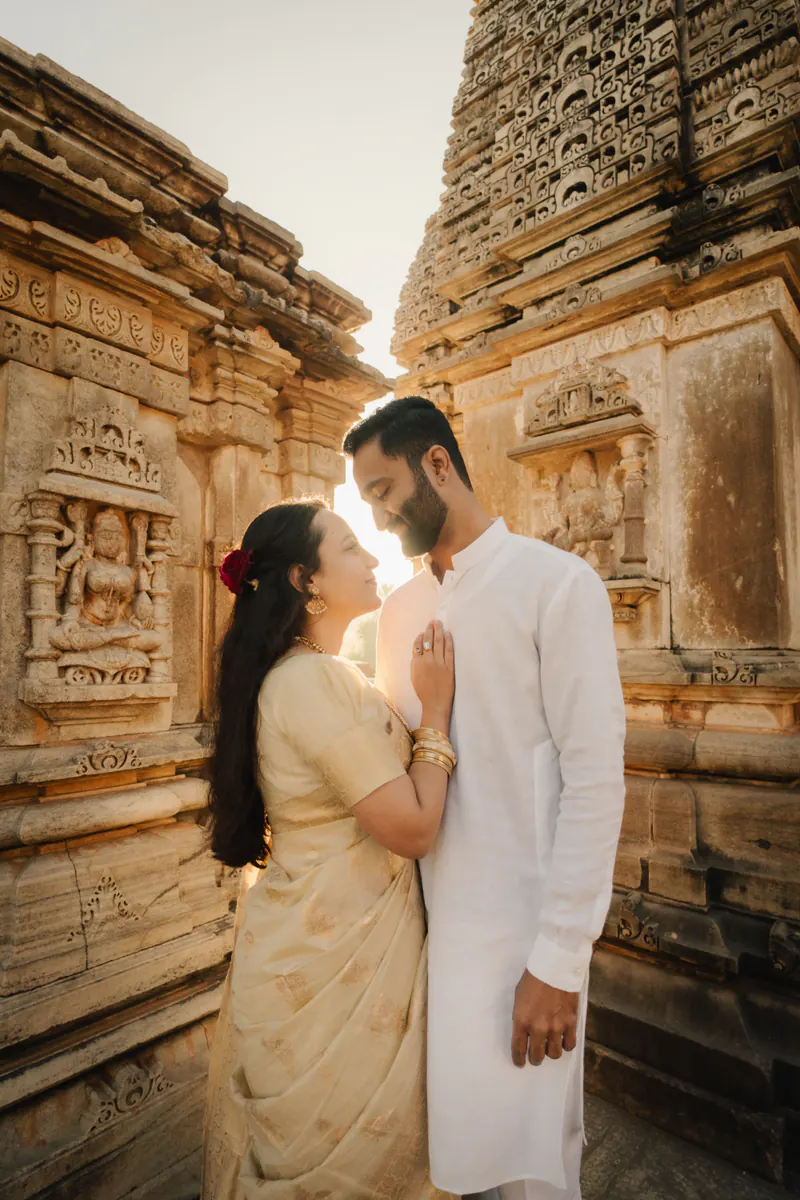
Business families
A matrimonial service for business families
Since 2012 with business families, Baniya, Agarwal and Maheshwari households among them.
The full answer
Evara Matrimony has worked since 2012 with business families, Baniya, Agarwal and Maheshwari households among them, in Delhi and abroad. Enquiries are handled discreetly, parents take part from the first conversation, and on Select a named matchmaker weighs how each family runs its business and its home. Evara does not verify income or business records; families judge those themselves.
One name, distinct communities
Sub-communities under the umbrella
Good Baniya matchmaking begins by naming the specific community, because each carries its own gotras and customs. A few of the larger ones:
Agarwal
Traced by tradition to Maharaja Agrasen and the old town of Agroha near Hisar in Haryana. Widely spread across Delhi, Haryana, Uttar Pradesh and Rajasthan, with its own well-known gotra tradition.
Maheshwari
A Vaishya community with strong roots in Rajasthan and a distinct set of gotras and family customs, found today across North and West India.
Oswal
A community associated with Rajasthan and with a large Jain presence, keeping its own lineages and observances alongside Hindu Baniya families.
Khandelwal
A Vaishya community with its own gotras and traditions, spread through Rajasthan and neighbouring states.
Porwal and Shrimali
Long-established Vaishya communities of the west, each with its own family networks, customs and marriage practices.
And more
Gahoi, Agrahari and others also sit within the Baniya name. We treat each community by its own customs, never as interchangeable.
- Clients50,000+
- Years14+
How it works.
Three steps, all in the Evara app.
Create your profile
Verified before it goes live.
Receive your matches
Each morning, in the app.
Say hello
Chat opens when you both agree.
Two ways to begin.
On the Evara app, or with a dedicated matchmaker for your family.
You see your matches and choose. Every profile is verified before it goes live.
- Create your profileFree, in a few minutes
- Matches each morningChosen around your preferences
- Chat when you both say yesOn the Evara app
Free to join
Start free membershipA matchmaker who knows your family searches for you.
- Meet your matchmakerOne person, for your whole search
- Handpicked profilesShortlisted and sent on WhatsApp
- Meetings arrangedWhen both families agree
From ₹51,000
See the matchmaking tiersReal couples. Real families.
These reviews describe our personalised matchmaking service, which families have used since 2012.

A heartfelt thank you to Evara Matrimony for bringing us together.
Thank you, Evara. The personal attention and care was extraordinary.
Baniya matrimony that starts with your community
How Evara works for Baniya families
Evara Matrimony has handled Baniya matrimony and rishtey from Delhi since 2012, for Agarwal, Maheshwari, Oswal, Khandelwal and other Vaishya families in India and abroad. Introductions follow your community and practice, and gotra stays with your family.
Evara handles Baniya matrimony and Baniya rishtey from its Delhi office for Agarwal, Maheshwari, Oswal, Khandelwal, Porwal, Gahoi and other Vaishya families, in Delhi, across North and West India and abroad. Joining is free, and the two paid routes are priced in the costs section below. The first question is which community within the Baniya umbrella your family belongs to and how open it is to the others; the second is whether the household is Hindu or Jain in practice.
Where a Baniya family runs a business, a match has to fit how that household actually lives: the working hours, a joint or separate home, and parents who expect to take part at every step. We take that in on the first call, and on Select or Reserve a named relationship manager keeps it in view with every introduction.
A name that holds many communities
For Baniya families
Baniya, spelt Bania in older writing and also known by the older term vanik, is best understood not as one community but as a large family of them. The word comes from the Sanskrit vanija, meaning trader, and it has long served as an umbrella for a set of distinct Vaishya communities, each with its own history, its own gotras, and its own customs. When a family says it is Baniya, the real question in matchmaking is which community within that umbrella, because that is what shapes an alliance.
The communities gathered under the name include Agarwal, Maheshwari, Oswal, Khandelwal, Porwal and Shrimali families, along with others such as Gahoi and Agrahari. They are described as belonging to the Vaishya varna, and historically many were associated with trade, banking and money-lending. That association is a matter of history, not a description of people: Baniya families today are found across every profession, and we write about the community’s customs and identity here, never its wealth or standing.
Which community, then which gotra
Sub-community in matchmaking
Because Baniya covers so many communities, the first thing to name is the specific community a family belongs to and how open it is to others within the umbrella. Some families wish to match strictly within their own community, an Oswal family with Oswal families, a Maheshwari family with Maheshwari families. Others are open across Baniya communities where customs and values sit well together. Both are ordinary, and neither is more correct. No family is above or below another within this umbrella, and we hold to that in every introduction.
After sub-community comes gotra. Many Baniya families follow gotra exogamy, avoiding marriage within the same gotra, and the exact lineages differ from one community to another. Alongside these, some Gujarati and Rajasthani families still recognise older divisions: Baniya sub-castes have historically been split into Visa and Dasa groupings, distinctions that are centuries old, and the Gujarati Baniyas were traditionally said to have eighty-four divisions in all. How a family reckons kinship is its own to weigh, and it is a question that stays with the household rather than with us.
Hindu and Jain, north and west
Faith and region
Baniya families are either Hindu, most often Vaishnava and many following the Vallabha sampradaya, or Jain, and in several communities the two traditions live closely together. For a family, whether a prospective match shares its practice, its dietary customs, and its festival calendar can matter as much as sub-community itself, so we treat faith and observance as part of the brief, not an afterthought.
Geographically the community is centred on Rajasthan and Gujarat, with large and long-settled populations in Uttar Pradesh, Madhya Pradesh, West Bengal, Maharashtra and across the north. In Rajasthan, higher-status Baniya families preferred to call themselves mahajans, and Baniya families from the Marwar region are widely known as Marwaris, which is why many searches move naturally between the Baniya, Marwari and specific sub-community pages. We work across all of these regions, and coordinate with a family’s home city or the diaspora as needed.
What it costs
Two ways a Baniya family can work with Evara
The difference between the two routes is who does the choosing. On membership the matching is algorithmic and every profile is verified before it goes live, and a person approves its photos. On Select and Reserve a named person reads your family and picks every introduction.
Membership
₹999 a month, and nothing at all to join
Matches are chosen for you and a small set arrives each day. Every profile is verified before it goes live, and its photos are approved by a person. Nobody is assigned to your family. Lifetime membership is a single one-time payment with no renewals. Membership does not include a matchmaker, and the membership page sets out what selection involves and what the Select and Reserve tiers add. Is a matchmaker included.
See every membership term and lifetime
Personalised matchmaking
Select from ₹51,000 for 6 months (also ₹75,000 for 12 months or ₹1,00,000 until married)
Reserve is ₹2,51,000 in total, in two parts, with the second part due at a Roka with a family Evara introduced. Luxe is by invitation.
A named relationship manager learns your family, chooses each introduction by hand, gives you the reasoning for it, and is with you at family meetings in Delhi NCR, and on video call across India. Select is the first of these services and Reserve is the senior service above it. Each is bought separately, from the other and from membership.
Lifetime membership is one payment that never renews, and it is priced on its own page. Select and Reserve are priced inclusive of GST, and each is bought on its own. Read the Payment Terms before you pay.
Baniya matchmaking across North and West India
Where Baniya families find us
Baniya families are settled across the north and west. We serve these cities and more.
Specific communities we serve
Explore by community
Prefer to search within one community rather than the whole umbrella? Explore matchmaking for:
From the Evara Journal, and one page for business families
Read next
Two pieces from the Evara Journal for a Baniya family still deciding, each answering a question this page does not:
Baniya matrimony FAQs
Does Evara arrange Baniya rishtey in Delhi?
Yes. Evara Matrimony has been a marriage bureau in Delhi since 2012, and Baniya rishtey for families in Delhi, elsewhere in India and abroad are part of that work. Parents can lead the first conversation, and the family then picks membership or a named matchmaker on Select or Reserve.
How does Evara work with Baniya business families?
Where a family runs a business, we ask how the household lives around it: hours, travel, a joint or separate home, and how closely the parents expect to be involved. Those answers shape the introductions. Evara does not verify income, turnover or business records, and families weigh those details for themselves.
Is Baniya a single community?
No. Baniya, or Bania, is a broad Vaishya umbrella rather than one community. It gathers many distinct communities, including Agarwal, Maheshwari, Oswal, Khandelwal, Porwal and Shrimali families, each with its own history, gotras and customs. In matchmaking, the community within the umbrella is what shapes an alliance, so it is the first thing we establish.
How does Evara handle Baniya sub-communities?
Yes. Many families wish to match strictly within their own community, an Oswal family with Oswal families, or a Maheshwari family with Maheshwari families. Others are open across Baniya communities where customs and values align. Evara matches on community, and we ask early so both preferences are treated with equal respect.
Common questions
How does Evara handle gotra across the different communities?
Many Baniya families follow gotra exogamy, avoiding marriage within the same gotra, and the exact lineages differ from one community to another. Evara matches on community, not on gotra. Which lineages a family avoids stays with that family and its own community practice.
Can you match Hindu and Jain Baniya families?
We can. Baniya families are either Hindu, most often Vaishnava, or Jain, and in several communities the two live closely together. Some families see a match across the two as natural, while others prefer to stay within their own practice. We treat faith, diet and festival customs as part of the brief.
How does Baniya relate to Marwari and Agrawal?
Agrawal is one of the communities within the Baniya umbrella, with its own tradition tracing to Maharaja Agrasen. Marwari usually refers to Baniya families from the Marwar region of Rajasthan, where higher-status families were also known as mahajans. Many searches move between these pages, and we help families place themselves precisely.
Are families ranked by sub-community on Evara?
No. Sub-community, gotra and the old Visa and Dasa divisions are matters of identity and family history, not rank. No family is above or below another within the Baniya umbrella. Evara does not rank or sort anyone by any of them.
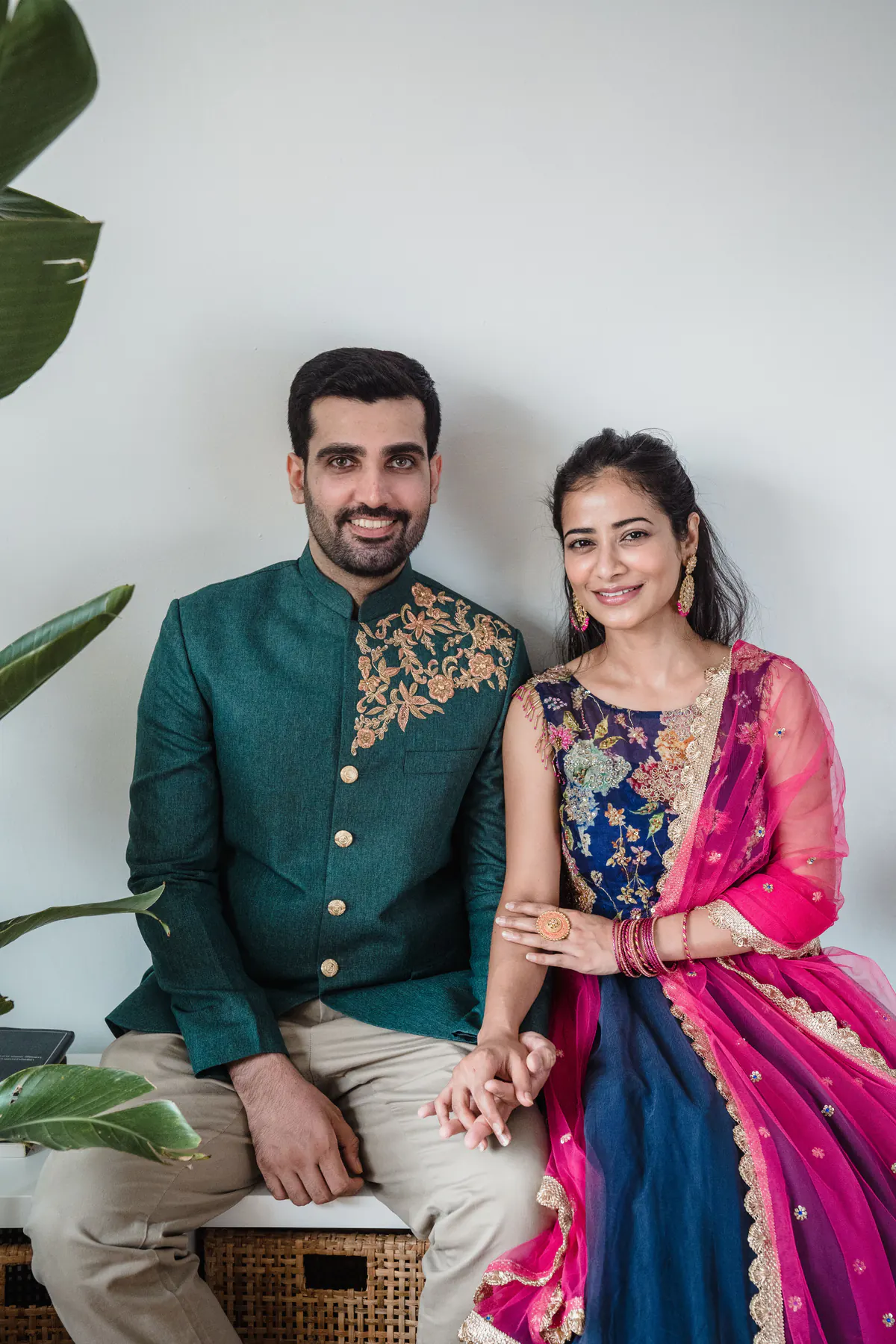
Begin your Baniya alliance
Free consultation. Every enquiry personally attended to.