Jain matrimony
Jain marriage bureau and matrimony service in Delhi
A Jain marriage bureau in Delhi since 2012, for Digambara and Svetambara families.

The short answer
A Jain matrimonial service, in Delhi and abroad
Jain families matched from one Delhi office since 2012, and abroad too.
The full answer
Evara Matrimony has matched Jain families from its Delhi office since 2012, and Jain families abroad too. Each family tells us its tradition, Digambara or Svetambara, its sub-community and how strictly the household keeps a Jain diet, and introductions follow those answers. Joining is free; membership and Select, with a named matchmaker, are priced on the plans page.
Matchmaking that respects tradition
Why Evara for Jain families
Fourteen years of matching families across India has taught us where the considerations that matter most to Jain households lie.
Digambara and Svetambara
We understand the two traditions and their observances, and we match within a tradition when a family wishes or across them when both households are comfortable and values align.
Identity, never rank
Oswal, Porwal, Agrawal Jain, Khandelwal, Shrimal, Humad and others carry their own family history. Evara does not rank or sort anyone by any of them.
Diet as a shared value
A shared commitment to vegetarianism, and for many families the avoidance of root vegetables, is often central. We factor diet into introductions from the first conversation.
Gotra considerations
Evara matches on community, not on gotra. Where a family observes gotra rules, that judgement stays with the household and its own tradition.
Verified profiles
Every profile is verified before it goes live, and its photos are approved by a person. On Select or Reserve a matchmaker curates each introduction by hand. What each check establishes, and what it does not, is set out on the profile verification page. How profiles are checked.
Discretion, always
Jain community circles are close and word travels. Membership: only verified Evara members can see your profile, never the public or search engines. Select and Reserve: while your plan is active, your profile is taken out of what members see.
- Clients50,000+
- Years14+
How it works.
Three steps, all in the Evara app.
Create your profile
Verified before it goes live.
Receive your matches
Each morning, in the app.
Say hello
Chat opens when you both agree.
Two ways to begin.
On the Evara app, or with a dedicated matchmaker for your family.
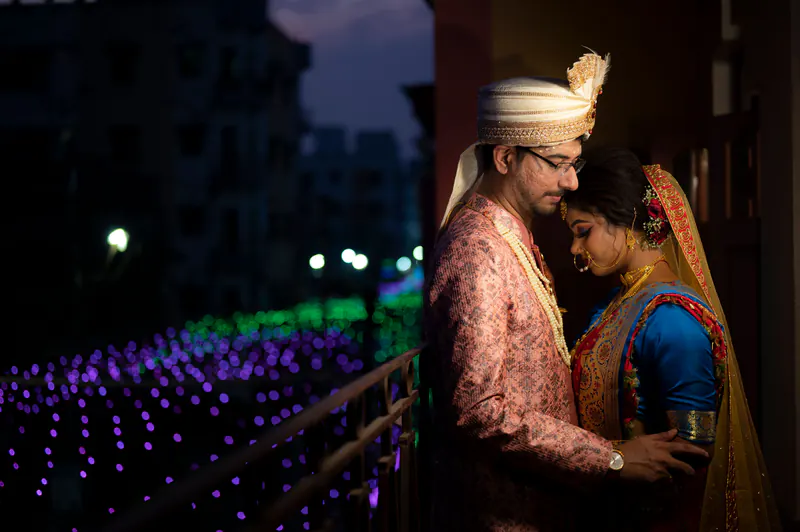
You see your matches and choose. Every profile is verified before it goes live.
- Create your profileFree, in a few minutes
- Matches each morningChosen around your preferences
- Chat when you both say yesOn the Evara app
Free to join
Start free membershipA matchmaker who knows your family searches for you.
- Meet your matchmakerOne person, for your whole search
- Handpicked profilesShortlisted and sent on WhatsApp
- Meetings arrangedWhen both families agree
From ₹51,000
See the matchmaking tiersReal couples. Real families.
These reviews describe our personalised matchmaking service, which families have used since 2012.

A heartfelt thank you to Evara Matrimony for bringing us together.
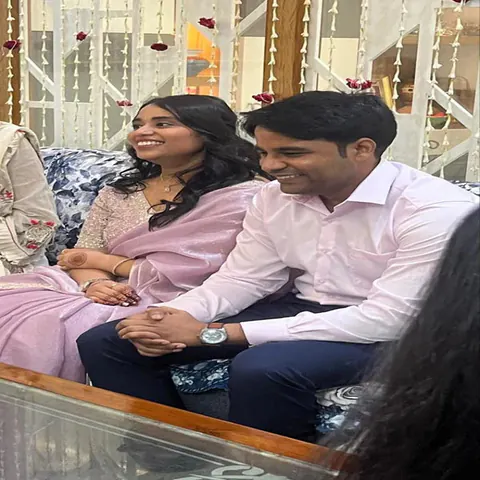
Thank you, Evara. The personal attention and care was extraordinary.
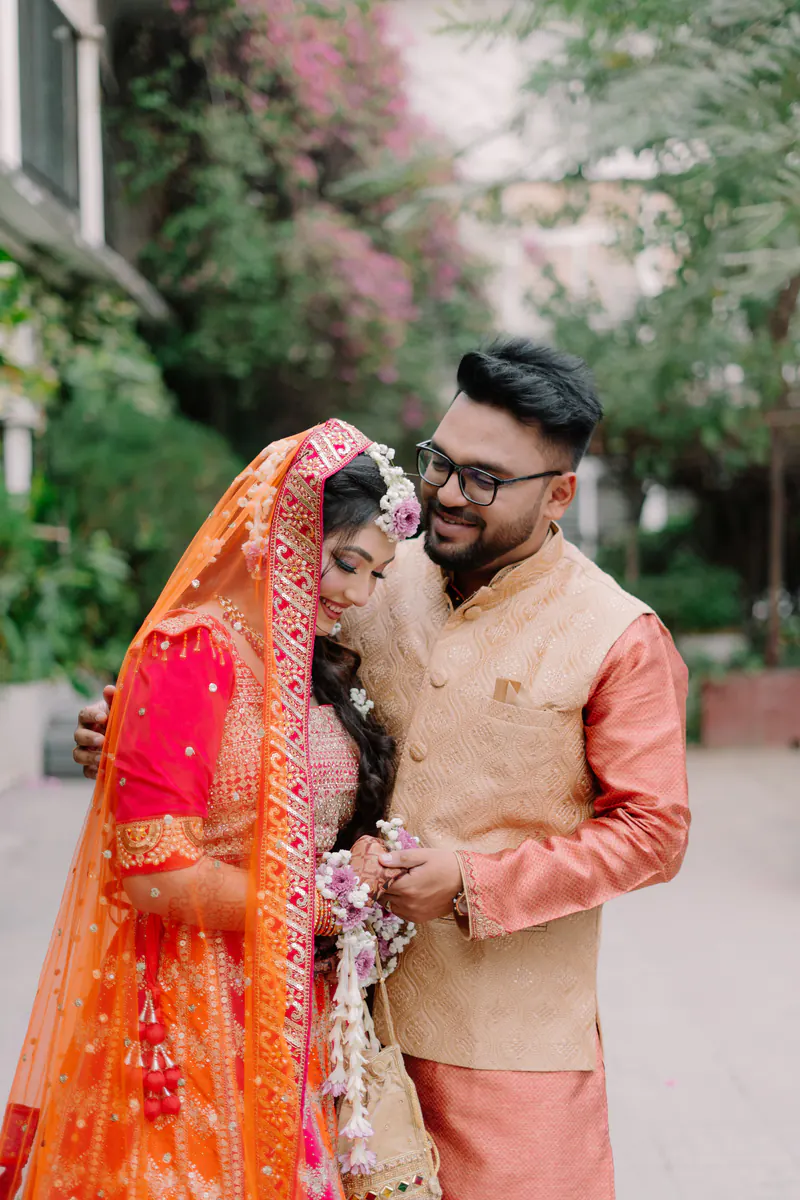
What a Jain marriage bureau should ask first
How Evara works for Jain families
Evara Matrimony has been a Jain marriage bureau in Delhi since 2012, arranging Jain rishtey for Digambara and Svetambara families in India and abroad. Introductions follow your tradition, your sub-community and the Jain diet your household keeps. On membership, matches chosen for your family arrive each day; on Select or Reserve, a named relationship manager picks each one by hand. Joining is free. To start, call or WhatsApp +91 93555 66533, Monday to Saturday, 10 AM to 7 PM IST, or meet the team at the Pitampura office by appointment.
As a Jain marriage bureau, Evara starts where a Jain family starts: tradition, sub-community and diet. Tell us whether your household is Digambara or Svetambara, whether it is Oswal, Porwal, Agrawal Jain, Khandelwal or another community, and whether onion, garlic and root vegetables are kept out of the kitchen, and every introduction is weighed against those answers. Families in Delhi can meet the team in person; Jain families elsewhere in India and abroad meet on video first.
There are two ways to use this Jain matrimony service. On membership, matches chosen for your family arrive each day and nobody is assigned to you. On Select or Reserve, a named relationship manager picks each introduction by hand and is with you at family meetings. What membership, Select and Reserve cost is set out in the costs section below. Gotra, where your family observes it, stays a judgement for your family. Membership does not include a matchmaker, and the membership page sets out what selection involves and what the Select and Reserve tiers add. Is a matchmaker included.
A faith that shapes daily life
For Jain families
Jainism is one of India’s oldest living religions, and for the families who follow it the faith is not confined to the temple. It shapes the kitchen, the calendar and the choices a household makes every day. At its heart lies ahimsa, non-violence toward every living being, and from that single principle flows much of what a Jain family holds dear. The tradition looks to twenty-four Tirthankaras, spiritual teachers, the last of whom, Mahavira, is traditionally placed in the sixth and fifth centuries BCE and whose teachings are still recited today.
When a Jain family looks for an alliance, they are looking for a household that already shares these bearings, or one that will honour them. That is why a good introduction begins not with a checklist but with an understanding of how a family actually observes its faith. Jains are the most literate religious community recorded in India’s 2011 Census, and families tend to weigh education and shared conviction together. Our work is to listen closely to both.
Digambara and Svetambara
The two traditions
Jainism has two major traditions, and understanding which a family follows is often the first practical question in a match. The Digambara, whose name means sky-clad, hold that a fully renounced monk owns nothing at all, not even clothing; the Svetambara, meaning white-clad, hold that monks may wear simple white robes. The difference runs deeper than dress, touching scripture, ritual and the observance of festivals, and both traditions have flourished in different regions of India for many centuries.
In matchmaking this matters because many Jain families prefer to marry within their own tradition, where temple practice and household observance already align. Others are open across the Digambara and Svetambara traditions where the two families find common ground in values and daily life. Neither choice is better than the other, and no family is above or below another on this page or in our work. Our task is to understand precisely where your family stands and to ask early, so that introductions fit from the start.
Names that carry family history
Sub-communities
Jain is not a single group. Across the community you will find the Oswal, the Porwal, the Agrawal Jain, the Khandelwal, the Shrimal and the Humad, among others. These names are threads of family and regional history, many of them tracing back to towns and clans in Rajasthan and Gujarat, and each carries its own network of relatives, customs and, often, preferences about whom to marry within or across. They are matters of identity, not status, and we hold them exactly that way. Some of these names, among them Oswal and Agrawal, are shared with Marwari families, and our page on Marwari matchmaking explains how we approach those searches.
What this means in practice is that a family’s brief is specific. Some families wish to match strictly within their sub-community, where extended networks already overlap. Others are open across Jain sub-communities, or between the two traditions, provided the essentials of faith and diet align. Some care most about the person and the household and are open on community altogether. We map exactly where your family sits, and we never assume.
Customs, diet and the calendar
The rhythm a household keeps
For many Jain families, compatibility rests on whether both sides keep a similar rhythm of observance. Diet is often at the centre of it. Jain practice is strictly lacto-vegetarian, and many households also avoid root vegetables such as onion, garlic and potato, since harvesting them harms the smallest forms of life. When two families share this, a great deal is already understood between them; when they do not, it is a conversation worth having honestly and early, which is exactly what we do.
The calendar binds families together too. Paryushana, kept by Svetambaras over eight days and by Digambaras as Das Lakshana over ten, is the most important festival of the year, a time of fasting, reflection and study that closes with a day of seeking forgiveness, when Jains say Micchami Dukkadam to one another. Mahavir Jayanti marks the birth of Mahavira, the twenty-fourth Tirthankara. Pilgrimage matters as well, to sites such as Shravanabelagola in Karnataka with its great statue of Bahubali. A match where both families recognise each other’s way of keeping these observances tends to begin far more gently than one where they do not.
A community spread wide
Across India and abroad
Jain families are concentrated in Rajasthan, Gujarat, Madhya Pradesh, Maharashtra, Delhi and Karnataka, and over generations many have settled well beyond those states and overseas. A search today often reaches across cities and sometimes across continents, and it asks for the same care as a match within one town, plus a little more: an honest conversation about where a family expects to settle, about the customs a household raised elsewhere still keeps, and about how two families in different places can meet properly.
We handle introductions video-first so both families can meet before anyone travels, and we plan in-person visits around festivals and trips home. Whether a family in Ahmedabad is looking close to home, a family in Delhi is open across regions, or relatives abroad wish to marry back into the community, the considerations are the same at heart. Faith, diet and family come first, and everything else follows.
Two routes for a Jain family, and what each costs
What it costs
The difference between the two routes is who does the choosing. On membership the matching is algorithmic and every profile is verified before it goes live, and a person approves its photos. On Select and Reserve a named person reads your family and picks every introduction.
Membership
₹999 a month, and nothing at all to join
Matches are chosen for you and a small set arrives each day. Every profile is verified before it goes live, and its photos are approved by a person. Nobody is assigned to your family. Lifetime membership is a single one-time payment with no renewals.
See every membership term and lifetime
Personalised matchmaking
Select from ₹51,000 for 6 months (also ₹75,000 for 12 months or ₹1,00,000 until married)
Reserve is ₹2,51,000 in total, in two parts, with the second part due at a Roka with a family Evara introduced. Luxe is by invitation.
A named relationship manager learns your family, chooses each introduction by hand, gives you the reasoning for it, and is with you at family meetings in Delhi NCR, and on video call across India. Select is the first of these services and Reserve is the senior service above it. Each is bought separately, from the other and from membership.
Lifetime membership is one payment that never renews, and it is priced on its own page. Select and Reserve are priced inclusive of GST, and each is bought on its own. Read the Payment Terms before you pay.
Jain matchmaking across India
Where Jain families find us
Jain families are settled across the country. We work with them wherever they are.
Other communities we serve
Expanding your search
Many families are open to alliances across communities. Explore matchmaking for:
From the Evara Journal
Read next
Two pieces from the Evara Journal for a Jain family still deciding, each answering a question this page does not:
Jain matrimony FAQs
Is Evara a Jain marriage bureau in Delhi?
Yes. Evara Matrimony has worked from its Delhi office since 2012, and Jain families in Delhi, across India and overseas are part of that work. A family can sit with the team in Delhi or begin on video, and then decide between membership and a named matchmaker on Select or Reserve.
What should a Jain family look for in a matrimonial service?
A service that asks about tradition, sub-community and diet before it introduces anyone, that can explain why a particular household was suggested, and that states its prices openly. Evara asks those questions in the first conversation, and every plan is priced on the plans page before anyone pays.
Do you match within a specific tradition, Digambara or Svetambara?
Yes. We understand the Digambara and Svetambara traditions and their observances. We match strictly within a tradition when a family wishes, and across the two when both households are comfortable and their values and daily practice align. We ask about this early so introductions fit from the start.
How does Evara handle sub-community, such as Oswal, Porwal or Khandelwal?
We do. Oswal, Porwal, Agrawal Jain, Khandelwal, Shrimal, Humad and other sub-communities each carry their own family history, and we treat them as identity rather than rank. Evara matches on community. Which of these a family will look beyond is a question it decides for itself.
Common questions
Can parents look for Jain rishtey on behalf of a son or daughter?
Yes. Parents often begin the search for Jain rishtey themselves, and Evara works with the family as well as the person marrying. Parents can join the first conversation, describe what the household keeps, and on Select or Reserve hear the reasoning behind each introduction before it goes further.
How do you handle diet and vegetarianism in a match?
For most Jain families a shared commitment to vegetarianism is essential, and many also avoid root vegetables such as onion, garlic and potato. We treat diet as a core value, ask about it in the first conversation, and factor it into every introduction so that both families are aligned before they meet.
How does Evara handle gotra?
Evara matches on community, not on gotra. Where a family observes gotra rules, that judgement stays with the family and its own tradition.
Can you match Jain families living in different cities or abroad?
Yes. Jain families are concentrated in states such as Rajasthan, Gujarat, Maharashtra, Delhi and Karnataka, and many have settled elsewhere in India and overseas. We regularly connect families across cities and countries, coordinating introductions video-first and planning meetings around festivals and visits home.
Which festivals and customs do you keep in mind for Jain families?
We understand that observances such as Paryushana and Das Lakshana, which close with seeking forgiveness through Micchami Dukkadam, and Mahavir Jayanti, are central to the year, along with practices of fasting and pilgrimage. Where these shape a family’s life, we look for matches whose households keep a similar rhythm.

Begin your Jain alliance
Free consultation. Every enquiry personally attended to.