Marwari matrimony
Marwari matchmaking and marriage bureau, from Delhi
Marwari matrimony since 2012, from Delhi, for families in Kolkata, Mumbai and abroad.
The short answer
A marriage bureau for Marwari matrimony
Marwari matrimony since 2012 for families in Kolkata, Mumbai, Delhi and abroad.
The full answer
Evara Matrimony, a marriage bureau working since 2012 from its Delhi office, handles Marwari matrimony for families in Kolkata, Mumbai, Delhi and abroad. Families name their community, such as Maheshwari, Agrawal or Oswal, and whether they keep Jain or Vaishnava practice, and introductions follow that. Gotra stays with the family. Joining is free; paid plans are priced openly.
Matchmaking that knows the networks
Why Evara for Marwari families
Fourteen years of matching families across India has taught us where the considerations that matter most to Marwari households lie.
Pan-India networks
Marwari families are settled from Rajasthan to Kolkata, Mumbai, Assam and the Northeast. We connect households across those networks, wherever a family has made its home.
Identity, never rank
Maheshwari, Agrawal, Oswal, Khandelwal and other communities are counted as Marwari. Evara does not rank or sort anyone by any of them.
Gotra considerations
Gotra exogamy is central to traditional Marwari matchmaking. Evara matches on community, not on gotra, so whether a lineage is too close stays with your family.
Rajasthani custom
From the language spoken at home to the sequence of a Rajasthani wedding, we understand the customs a Marwari family keeps and look for matches who share or respect them.
Verified profiles
Every profile is verified before it goes live, and its photos are approved by a person. On Select or Reserve a matchmaker curates each introduction by hand. What each check establishes, and what it does not, is set out on the profile verification page. How profiles are checked.
Discretion, always
Marwari community circles are close and news travels. Membership: only verified Evara members can see your profile, never the public or search engines. Select and Reserve: while your plan is active, your profile is taken out of what members see.
- Clients50,000+
- Years14+
How it works.
Three steps, all in the Evara app.
Create your profile
Verified before it goes live.
Receive your matches
Each morning, in the app.
Say hello
Chat opens when you both agree.
Two ways to begin.
On the Evara app, or with a dedicated matchmaker for your family.
You see your matches and choose. Every profile is verified before it goes live.
- Create your profileFree, in a few minutes
- Matches each morningChosen around your preferences
- Chat when you both say yesOn the Evara app
Free to join
Start free membershipA matchmaker who knows your family searches for you.
- Meet your matchmakerOne person, for your whole search
- Handpicked profilesShortlisted and sent on WhatsApp
- Meetings arrangedWhen both families agree
From ₹51,000
See the matchmaking tiersReal couples. Real families.
These reviews describe our personalised matchmaking service, which families have used since 2012.
Within three months we found the most compatible match. The discretion was exceptional.
The entire process was seamless and deeply personal. Thank you, Evara.
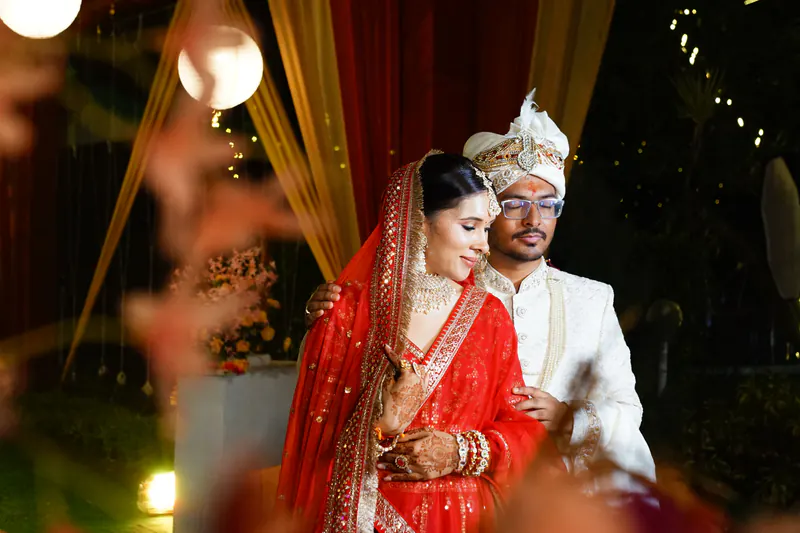
Marwari matchmaking, network by network
How Evara works for Marwari families
Evara Matrimony has been a marriage bureau for Marwari matrimony since 2012, working from Delhi with Marwari families in Rajasthan, Kolkata, Mumbai, the Northeast and abroad. Matches follow your community, your practice and the cities your family would consider. To start, join free, or call or WhatsApp +91 93555 66533, Mon to Sat, 10 AM to 7 PM IST. A parent can make that first call.
Evara works as a Marwari marriage bureau in Delhi for families whose relatives may be spread from Jodhpur and Jaipur to Kolkata, Mumbai, Guwahati and abroad. A search begins with three answers: the community, whether Maheshwari, Agrawal, Oswal, Khandelwal or another; whether the household keeps Vaishnava or Jain practice; and which cities the family would consider for a daughter or son to settle in.
From there, Marwari matrimony at Evara runs one of two ways. Membership sends a small set of matches each day, with nobody assigned to your family. Select or Reserve gives you a named relationship manager who picks every introduction and gives you the reasoning for it. The costs section below prices both routes. Where a family keeps gotra exogamy, it weighs each lineage for itself.
When the family leads the search
Family-led searches
The first call about a proposal may come from a parent, an uncle or an elder sibling rather than from the son or daughter, and Evara works with that arrangement rather than around it. Anyone in the family can call or WhatsApp before paying anything, and someone on the team talks it through with the family. We also ask to hear from the son or daughter early, because the introductions have to suit the person who will marry as much as the household they come from.
Where a family runs a business, parents often want to know how the other household earns its living, whether a son or daughter is expected to join the family firm, and whether the couple would live in a joint family home. These are fair questions, and they belong in the conversation between the two families. Evara does not verify income or business records, so ask them directly, early, and well before a Roka.
On Select, your relationship manager comes with you to family meetings in Delhi NCR and joins them on a video call anywhere else in India. The steps from the first conversation to the first meeting between families are set out in how matchmaking works, step by step.
Looking quietly in a close network
Privacy
Marwari families in Kolkata, Jaipur, Mumbai and Delhi are often connected through relatives, trade associations and community bodies, and many parents would rather nobody knew they were looking until a proposal is serious. That is a reasonable wish, and the profile settings allow for it.
A profile on Evara is shown to the members Evara matches you with, not to the public and not to search engines. You can show a short version, with first name, age, city, religion and community, and keep photographs and the rest hidden until both sides have shown interest. Evara does not reveal phone numbers or email addresses, and on Select, contact details are shared only when both families agree.
A community named for a homeland
For Marwari families
The word Marwari points first to a place. It names the communities that trace their roots to Marwar, the historical region of southwestern Rajasthan whose principal city is Jodhpur, and to the greater Rajasthan around it. This is dry, open country, and the language spoken there, Marwari, belongs to the Rajasthani family of tongues. To be Marwari is, before anything else, to belong to that homeland and to the customs it shaped, even for families who have not lived there in generations.
That distinction matters in matchmaking, because Marwari is often confused with a single caste or with commerce alone. It is neither. It is a regional identity that gathers several communities together, and its story is really a story of migration and of family networks that reach across the map. When a Marwari family looks for an alliance, they are usually looking within those networks, wherever the relatives happen to have settled.
The migration
From Marwar to the whole map
The defining chapter of Marwari history is the great dispersal out of Rajasthan. From the eighteenth and nineteenth centuries onward, many families left the Marwar region and travelled long distances to make new homes, following the trade routes of the day. They settled in numbers in Kolkata, where the Burrabazar quarter grew into a major centre of Marwari life, in Mumbai on the western coast, and across Assam and the wider Northeast. Smaller communities took root in towns across central and eastern India as well.
Because of this migration, a Marwari family today may have grown up in Bengal, Maharashtra or the Northeast while still keeping Rajasthani speech at home and Rajasthani custom at weddings. A match, therefore, often reaches across states as a matter of course. A family in Kolkata may look toward relatives’ networks in Jaipur or Mumbai, and a family whose roots are in Marwar may look toward the diaspora that left generations ago. Understanding this geography is the first thing good matchmaking for the community has to get right.
Several communities, one origin
Sub-communities
Marwari gathers a number of communities under one regional name. Among them are the Maheshwari, who trace their origins to Marwar and greater Rajasthan, the Agrawal, the Oswal and the Khandelwal, and others besides. Some of these families follow Vaishnava Hindu traditions and some follow Jainism, and all of them share the Rajasthani homeland and, in large part, its speech. These are matters of identity and family history, never of rank, and no family is above or below another on this page or in our work.
In practice this shapes how a brief is written. Some families wish to match strictly within their own sub-community, where extended networks already overlap; others are open across the Marwari communities where language, custom and values align; and some care most about the person and the household. Our task is to understand exactly where your family sits, to ask early, and never to assume. Because the Oswal and Agrawal names also appear among Jain families, we take particular care to record a family’s tradition and diet alongside its community. A family open beyond the Marwari communities can say so: Evara also works with Khatri families and Brahmin families, among others.
Three things to settle early
Gotra, kundali and diet
Evara does not filter introductions by gotra, so a family that keeps gotra exogamy checks it itself. Families differ in how many lineages they set aside: some avoid only their own gotra, many also avoid the mother’s, and some add a grandmother’s. The simplest course is to state which gotras your family avoids in the first exchange with the other family, before horoscopes are compared or a meeting is fixed, so neither side spends weeks on a proposal that was never possible.
Kundali is a firm requirement in some Marwari households and a gentle preference in others, and it helps to say which before introductions start. Select covers kundali matching for every profile on your shortlist and a detailed analysis for the one you approve, and when you join it adds a consultation with our in-house astrologer.
Diet is the third. Many Marwari households keep a vegetarian kitchen, some Jain households also avoid onion, garlic and root vegetables, and some families are relaxed about eating out but strict at home. Tell us which applies to yours; diet is one of the things Evara records, so a household that keeps a Jain kitchen is not introduced to one where the question never arises.
The customs a family carries
Language and weddings
For many Marwari families, compatibility rests partly on whether both sides carry the same customs, and language is often the first sign of it. Marwari, a Rajasthani tongue, is still spoken in many homes even far from Rajasthan, and a shared language at home tells a family a great deal about how a household lives. Rajasthani wedding customs, with their distinctive songs, rituals and stages, are kept up carefully even by families who left the homeland generations ago, and matching two families who recognise the same sequence makes the early days of an alliance far easier.
These customs are also part of what a family hopes to share with a new member. We sit with families over exactly these details, because a match where both households keep a similar rhythm of language, ritual and festival tends to begin far more gently than one where they do not. Where a family observes gotra exogamy, marrying outside its own clan lineage, that is a custom the household keeps for itself.
Where your family is, and how we meet
Delhi NCR, Kolkata, Mumbai and abroad
Marwari families in Delhi NCR can meet the team at the office in Netaji Subhash Place, Pitampura, near the Netaji Subhash Place metro station on the Red and Pink Lines. More on working with the Delhi office is on the marriage bureau in Delhi page. The one Evara office, its hours and how to book an appointment are on the contact page. Where the office is.
Families in Kolkata and Mumbai, where many Marwari households have lived for generations, usually start on the phone or on video, and in-person meetings are planned around a visit to Delhi or to relatives. A proposal between a Kolkata family and a Jaipur family is an ordinary search here, not an exception.
Families abroad start the same way, and the NRI matchmaking service explains how introductions run across countries. The office keeps Indian hours, Monday to Saturday, 10 AM to 7 PM IST. Dubai is 1 hour 30 minutes behind India and Singapore 2 hours 30 minutes ahead of India, so both can call within their own working day. London is 4 hours 30 minutes behind India in the northern summer and 5 hours 30 minutes in winter, and New York 9 hours 30 minutes behind India in summer and 10 hours 30 minutes in winter, so the office day falls in a London morning and a New York early morning; a WhatsApp message to +91 93555 66533 can be sent at any hour.
A checklist for Marwari families
Before the first call
Whoever in the family makes the first call, these answers make it far more useful.
Community and practice
Your community, whether Maheshwari, Agrawal, Oswal, Khandelwal or another; whether the household is Vaishnava or Jain; and how far beyond it the family will look.
Gotras to avoid
Which gotras the family sets aside, only your own or the mother’s and others too, written down so it can be shared with the other family at the first exchange.
Kundali
Whether a horoscope match is essential, preferred or not needed, and, if it matters, the date, time and place of birth ready to hand.
Cities and settling
Which cities the family would consider for the couple, and whether a move abroad, or from Kolkata or Mumbai to Delhi, is open.
Home and work
Whether the couple would live in a joint family home or on their own, and whether a son or daughter is expected in a family business or will keep their own career.
Who speaks for the family
Which parent or relative is the point of contact, and when the son or daughter will join the calls.
Two ways a Marwari family can work with Evara
What it costs
The difference between the two routes is who does the choosing. On membership the matching is algorithmic and every profile is verified before it goes live, and a person approves its photos. On Select and Reserve a named person reads your family and picks every introduction.
Membership
₹999 a month, and nothing at all to join
Matches are chosen for you and a small set arrives each day. Every profile is verified before it goes live, and its photos are approved by a person. Nobody is assigned to your family. Lifetime membership is a single one-time payment with no renewals. Membership does not include a matchmaker, and the membership page sets out what selection involves and what the Select and Reserve tiers add. Is a matchmaker included.
See every membership term and lifetime
Personalised matchmaking
Select from ₹51,000 for 6 months (also ₹75,000 for 12 months or ₹1,00,000 until married)
Reserve is ₹2,51,000 in total, in two parts, with the second part due at a Roka with a family Evara introduced. Luxe is by invitation.
A named relationship manager learns your family, chooses each introduction by hand, gives you the reasoning for it, and is with you at family meetings in Delhi NCR, and on video call across India. Select is the first of these services and Reserve is the senior service above it. Each is bought separately, from the other and from membership.
Lifetime membership is one payment that never renews, and it is priced on its own page. Select and Reserve are priced inclusive of GST, and each is bought on its own. Read the Payment Terms before you pay.
Marwari matchmaking across India
Where Marwari families find us
Marwari families are settled across the country. We work with them wherever they are.
Other communities we serve
Expanding your search
Many families are open to alliances across communities. Explore matchmaking for:
From the Evara Journal, and one page for business families
Read next
One piece from the Evara Journal for a Marwari family still deciding, on a question this page does not answer:
Marwari matrimony FAQs
Is Evara a Marwari marriage bureau in Delhi?
Yes. Evara Matrimony has run its marriage bureau from an office in Delhi since 2012. Marwari families in Delhi meet the team in person, while families in Kolkata, Mumbai, Rajasthan and abroad start on video, with in-person meetings planned around their visits.
How is Marwari matchmaking at Evara different from searching a matrimony website?
On a website the family does the searching. At Evara a Marwari family describes its community, its practice and the cities it would consider, and matches are chosen for it; on Select or Reserve a named relationship manager also reads the family and explains why each introduction was made.
What does Marwari mean, and who is included?
Marwari is a regional identity, not a single caste. It names communities that originate from the Marwar region and greater Rajasthan, including the Maheshwari, Agrawal, Oswal and Khandelwal, among others, spanning both Hindu and Jain families. We hold each community as identity and family history and match according to your family’s wishes.
Do you match Marwari families across different cities and states?
Yes, and it is one of our most common searches. Marwari families migrated from Rajasthan to Kolkata, Mumbai, Assam and the Northeast, and their networks reach across the country. We connect households wherever they have settled, coordinating introductions video-first and planning meetings around visits home.
Common questions
How does Evara handle sub-community, such as Maheshwari or Agrawal?
We do. Maheshwari, Agrawal, Oswal, Khandelwal and other Marwari sub-communities each carry their own family networks. Evara matches on community. Which of these a family will look beyond is a question it decides for itself.
How does Evara handle gotra in a Marwari match?
Gotra exogamy, marrying outside one’s own clan lineage, is central to traditional Marwari matchmaking. Evara matches on community, not on gotra. Whether a lineage is too close is a question that stays with your family.
Some communities are both Marwari and Jain. How do you tell them apart?
Names such as Oswal and Agrawal appear among both Marwari Hindu and Jain families, so we record a family’s tradition and diet alongside its community. That way a family looking specifically for a Jain match, or specifically for a Vaishnava Hindu Marwari match, is matched accordingly.
Do you understand Rajasthani wedding customs and language?
Yes. Many Marwari families keep the Marwari language at home and follow Rajasthani wedding customs even generations after leaving the homeland. Where these shape a family’s life, we look for matches whose households keep a similar rhythm of language, ritual and festival.
Can a parent start the search for a son or daughter?
Yes. Anyone in the family can call or WhatsApp +91 93555 66533, Monday to Saturday, 10 AM to 7 PM IST. We ask to hear from the son or daughter early too, so the introductions suit the person who will marry as well as the family.
Will relatives or family friends see that we are looking?
A relative can see your profile only if they are an Evara member and Evara matches the two of you, and even then only what your settings show. In a network that runs through Kolkata, Jaipur and Mumbai at once, the short version of the profile and the rule on contact details, both described in the privacy section above, are the two settings worth choosing first.
Does Evara check the other family’s business or income?
No. Evara does not verify income or business records. Where a family business matters to the match, ask about it directly in the first conversations between the families, and well before a Roka.
Is kundali matching part of Marwari matchmaking at Evara?
It can be. The kundali section above sets out what Select covers, from the shortlist match to the astrologer consultation. Whatever the plan, tell us at the start whether a horoscope match is essential for your family.
Begin your Marwari alliance
Free consultation. Every enquiry personally attended to.