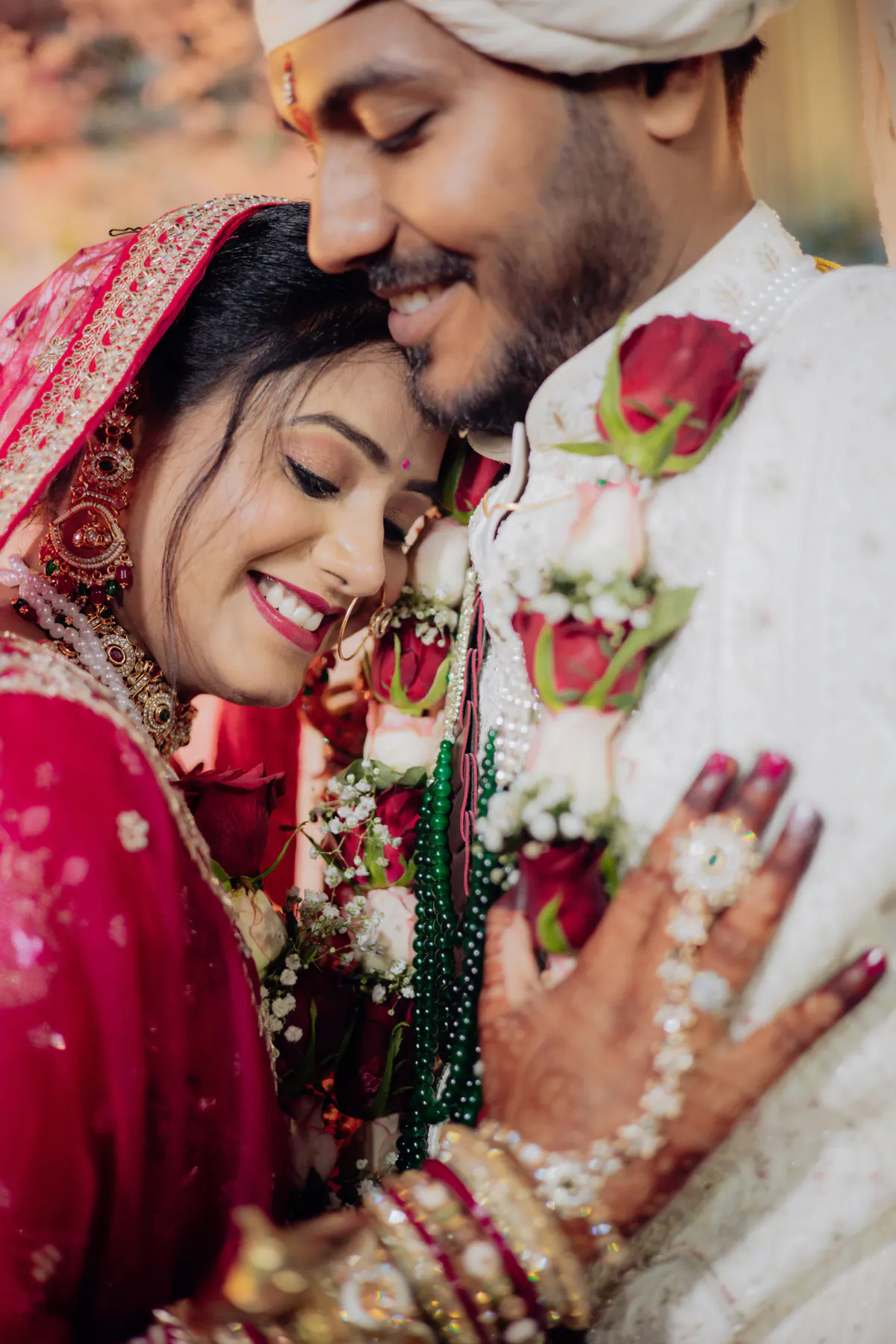
A matchmaker learns your family in a long first conversation, shortlists a few checked profiles and explains each one, makes the first approach to the other family, and stays with you through the meetings and the decision. At Evara Matrimony, matchmaking since 2012, that is what our Select and Reserve plans do. To begin, call or WhatsApp +91 93555 66533, Monday to Saturday, 10 AM to 7 PM IST. The first conversation is free.
The Short Answer
How premium matchmaking services work, in brief
Premium matchmaking services work by putting a person on the search. At Evara Matrimony, matchmaking since 2012, a matchmaker first learns the family in a long conversation, then shortlists a few checked profiles and explains each, makes the first approach to the other family, and stays involved through the meetings and the decision.
Evara describing its own practice. This is not a statement of law.
This guide is general information and not legal advice, and nobody at Evara is a lawyer. Where it states a rule, it names the statute or the judgment it came from and the date we last read it. Where it states a percentage, it names the survey, the round and the years of fieldwork, because a number from 2004-05 or 2011-12 describes those years and not this one. Law changes and surveys are superseded, so open the linked source before you act on anything here, and take advice on your own situation.
In Plain Words
What personalised matchmaking is
Personalised matchmaking is a guided search for a life partner, run by a real person who gets to know your family and what compatibility means to you, and who introduces you to a small number of people chosen with that in mind. It differs from a matrimonial website in the division of labour. A website hands you a search box and a large database and leaves the judgement to you. A matchmaker does the shortlisting, the checks and the first conversations on your behalf. For many families that difference is the point, because the hard part was rarely a shortage of profiles.
Evara describing its own practice. This is not a statement of law.
Marriage in India remains, for most families, a family decision. In the second round of the India Human Development Survey, with fieldwork in 2011-12, 73.0 percent of ever-married women said their parents or another relative alone chose their husband, 22.7 percent said the choice was made jointly with their parents, and 3.9 percent said they chose themselves. In the same data 69.7 percent had met their husband only on the wedding or gauna day. The survey also shows the couple’s own say rising with education: the bride’s share of the decision goes from 3 percent among women with no schooling to 9 percent among college graduates. This is survey data from 2011-12, so read it as the direction of travel rather than a picture of India in 2026.
Source: Indian Statistical Institute, Delhi, Economics and Planning Unit (Tridip Ray, Arka Roy Chaudhuri, Komal Sahai), Whose Education Matters? An Analysis Of Inter Caste Marriages In India, Discussion Paper 17-05, page 2; Indian Statistical Institute, Delhi, Economics and Planning Unit, Whose Education Matters?, Discussion Paper 17-05, Table 2, Decision making at the time of marriage, page 41; India Human Development Survey (NCAER and University of Maryland), Sonalde Desai, IHDS Research Brief No. 2, Marriage is a Family Affair. Jurisdiction: Not law. Academic economics research, discussion paper computed from IHDS-II microdata and Not law. Academic economics research, tabulation of IHDS-II microdata and Not law. Household survey research, published research brief. Retrieved 6 September 2026.
Personalised matchmaking is built around that reality rather than against it. This guide explains what a matchmaker actually does, how the process moves from a first conversation to a wedding, how it differs from a self-service portal or app, and the honest questions a family should ask before choosing either.
Evara describing its own practice. This is not a statement of law.
The Process
How the search works, step by step
It begins with a conversation, not a form. A matchmaker spends real time understanding the candidate and the family: community and sub-community, values, education and work, lifestyle, dietary preferences, where the family expects to settle, and the things people rarely write down but always mean. This is the profiling stage, and it is the foundation for everything that follows, because a good introduction depends on knowing what a family will actually say yes to.
Evara describing its own practice. This is not a statement of law.
From there the matchmaker searches, shortlists and checks. Rather than returning hundreds of results, a matchmaker proposes a small number of considered matches and explains why each one was chosen. Every profile is verified before it goes live, and its photos are approved by a person. Where documents are provided, education and employment details are reviewed too. On Select and Reserve a matchmaker speaks with the family directly. The purpose of these checks is to be reasonably sure the people you are considering are who they say they are. They are checks, not proof.
Evara describing its own practice. This is not a statement of law.
When both sides are interested, the matchmaker arranges the first introduction, often video-first so families can meet before anyone travels, and then guides the conversations that follow. If the families wish to proceed, the matchmaker helps plan the in-person meeting and stays involved through the decision. A matchmaker supports the families up to that point and often beyond, into the wedding itself.
Evara describing its own practice. This is not a statement of law.
In many families the milestone that follows a mutual yes is the Roka, a customary pre-engagement ceremony marking that both families intend to proceed. Its form varies widely by community and region. This page used to describe it as a mutual written confirmation by both families, which is one narrow form presented as the practice, and we could find no authority for that definition.
Pending qualified review. Roka is a custom, not a legal instrument, and its form varies by community. We found no authority stating what legal effect, if any, a Roka has. A lawyer should confirm the position before any family treats a Roka as binding, and before this page says that it is not.
Before You Call
What to have ready before the first call
The first conversation goes further when the family has settled a few things among themselves beforehand. The most useful is who decides. Say plainly whether the choice rests mainly with the son or daughter, mainly with the parents, or is shared, and who will speak for the family on later calls. A matchmaker who knows that from the start sends each first approach to the right person, and does not have to relearn the family halfway through the search.
Evara describing its own practice. This is not a statement of law.
Next come the facts that shape every shortlist: education and work, the city or country where the couple expects to live, diet, the community and whether the family is open beyond it, and any earlier marriage. If horoscopes matter to you, keep the date, time and place of birth to hand. On Select, every shortlisted profile is matched on kundali, the one you approve gets a detailed analysis, and a consultation with our in-house astrologer comes when you join.
Evara describing its own practice. This is not a statement of law.
Then separate what is fixed from what is only preferred. Most families arrive with a long list, and a list in which everything is essential leaves a matchmaker nothing to weigh. Write down the two or three things you will not move on, and treat the rest as preferences to talk through. Bring a few recent photographs taken in good light and, if you want your education and employment details reviewed, the documents that show them. Reserve includes a professional portfolio photoshoot, so a Reserve family can leave the photographs to us.
Evara describing its own practice. This is not a statement of law.
Two situations are better said on the first call than discovered later. A family living outside India should mention the time zone it will call from, because our phone and WhatsApp line is answered Monday to Saturday, 10 AM to 7 PM IST; our page on matchmaking for NRI families explains how the search runs across countries. A son or daughter marrying again after a divorce should say so at the start as well, and our page on matchmaking for divorced men and women sets out how we approach a second marriage.
Evara describing its own practice. This is not a statement of law.
The First Weeks
A family’s first weeks, as a process
Here is the order in which things happen for a family on Select. It is set out as a process rather than as anyone’s story, and without a timetable, because the pace turns on how narrow your requirements are and on which families are searching at the same moment.
Evara describing its own practice. This is not a statement of law.
It starts with the long conversation with your relationship manager, the one person who carries your search. Your profile is then completed and verified. Joining costs nothing, and your profile, your photographs and your verification are free. Membership: only verified Evara members can see your profile, never the public or search engines. Select and Reserve: while your plan is active, your profile is taken out of what members see.
Evara describing its own practice. This is not a statement of law.
The first shortlist follows: a few profiles chosen to your preferences, each with the reason it was chosen, and a kundali match where horoscopes matter to you. Your part is to answer each one. A yes moves it forward. A no is just as useful when you say why, because a clear reason tells your matchmaker more about what your family means than the first conversation could.
Evara describing its own practice. This is not a statement of law.
When your family says yes, the matchmaker makes the first approach to the other family. On Select, contact details are shared only when both families agree, so nobody’s phone number travels before both sides are ready. Checks lower the risk without removing it, which is why our guide on how to verify a matrimony profile lists what a family can still confirm for itself.
Evara describing its own practice. This is not a statement of law.
Then the first meeting. In Delhi NCR your relationship manager can be with you at family meetings, and elsewhere in India on a video call. After each meeting the matchmaker speaks with both sides, and what you say shapes the next shortlist. That cycle of shortlist, approach, meeting and follow-up repeats until both families decide. On Reserve, the Evara team arranges and coordinates the meetings, and stays involved at every step through to a confirmed Roka. A family that would like to meet the team before the first meeting can visit the office described on our marriage bureau in Delhi page, by appointment.
Evara describing its own practice. This is not a statement of law.
Judgement, Not Just Reach
What a matchmaker does that a search box cannot
A matrimonial website and a matchmaker solve different halves of the problem. A website gives you reach, at low cost. A matchmaker adds judgement, checks and discretion, and costs more. Here is what that looks like in practice.
Real profiling
A matchmaker learns your family in a long first conversation, not a dropdown menu. The search is shaped by what you mean, not only by the filters you can tick on a screen.
Evara describing its own practice. This is not a statement of law.
Curated shortlists
Instead of endless results to sift through alone, you receive a small number of matches, each chosen for reasons we set out to you.
Evara describing its own practice. This is not a statement of law.
Checks before introduction
Every profile is verified before it goes live, and its photos are approved by a person. These checks reduce the risk of misrepresentation. They do not remove it.
Evara describing its own practice. This is not a statement of law.
The first approach
A matchmaker makes the first contact and carries the early conversations, so neither family has to risk an awkward direct approach that could be misread.
Evara describing its own practice. This is not a statement of law.
Discretion
Membership: only verified Evara members can see your profile, never the public or search engines. Select and Reserve: while your plan is active, your profile is taken out of what members see. Your search is not advertised outside that.
Evara describing its own practice. This is not a statement of law.
Someone accountable
One person owns your search and answers for it. When a moment needs judgement, a human makes the call, rather than an algorithm ranking strangers.
Evara describing its own practice. This is not a statement of law.
Side by Side
Searching yourself or with a matchmaker, point by point
The same search, done two ways at Evara. Each card sets membership, where matches are chosen for you each day and your family does the rest, against Select and Reserve, where a matchmaker carries the search with you.
Finding profiles
Membership: matches, chosen around your preferences, arrive each morning, and paid membership brings more of them. Select and Reserve: a matchmaker shortlists to your preferences and tells you why each profile is there.
Evara describing its own practice. This is not a statement of law.
The first approach
Membership: your family sends the interests, within an allowance for the introductions you start each day. Select and Reserve: the matchmaker approaches the other family on your behalf.
Evara describing its own practice. This is not a statement of law.
Checks on the other family
Membership: every member’s profile is verified before membership begins, and anything further your family checks itself. Select and Reserve: the checks our team adds on each plan are listed on the Select and Reserve pages, and anything beyond them your family confirms itself.
Evara describing its own practice. This is not a statement of law.
Contact details
Membership: Evara does not reveal a member's email address, and a member's phone number reaches another member only when both have said yes and its owner has chosen to share it. Select and Reserve: contact details are shared only when both families agree.
Evara describing its own practice. This is not a statement of law.
Meetings
Membership: your family arranges them. Select: your relationship manager with you at family meetings in Delhi NCR, and on video call across India. Reserve: meetings arranged and coordinated by the Evara team, through to a confirmed Roka.
Evara describing its own practice. This is not a statement of law.
What it costs
Select and Reserve are priced by term, and our packages page sets out each one. Luxe is by invitation and its fee is not published. On every route the decision stays with your family.
Evara describing its own practice. This is not a statement of law.
The Honest Comparison
Matchmaker or matrimonial website
Here is how we put the choice to families, and it is our view rather than a finding from any study. The comparison is not that one route is good and the other is bad. A matrimonial website is a powerful tool for reach. It can put a profile in front of a very large number of people quickly and at low cost, and for families who are comfortable doing their own filtering, checking and outreach, that can be enough. What a website cannot do is exercise judgement for you. It cannot tell you which of two hundred profiles is worth a real conversation, it cannot confirm the person behind a photograph, and it cannot make a careful first approach to another family. It leaves all of that to you.
Evara describing its own practice. This is not a statement of law.
Personalised matchmaking inverts the model. You trade a very large pool for a smaller set of matches that have been thought about and checked, and you trade doing it yourself for having someone do the difficult parts alongside you. You also pay more. The right choice depends on the family: your budget, how much time you have, how much privacy you need, and how much of the checking and the first conversations you want to handle yourself. Some families use a website for reach and a matchmaker for the shortlist. There is no single right answer, and any service that pretends otherwise is selling rather than helping.
Evara describing its own practice. This is not a statement of law.
Whichever route a family takes, the marriage that follows sits inside the same legal framework. In India a Hindu marriage is solemnised under section 5 of the Hindu Marriage Act, 1955, and a marriage between any two persons, including a civil or inter-faith marriage, may be solemnised under section 4 of the Special Marriage Act, 1954. The bridegroom must have completed 21 years and the bride 18 years, under section 5(iii) of the Hindu Marriage Act and section 4(c) of the Special Marriage Act. The Prohibition of Child Marriage Act, 2006 reaches the same ages through section 2(a), which defines a child as a male under 21 or a female under 18. In Seema versus Ashwani Kumar, decided on 14 February 2006, the Supreme Court held that marriages of all citizens should be made compulsorily registrable in the State where they are solemnised, and directed the States and the Central Government to notify a procedure. What you have to do in practice is set by your State’s rules, so check them.
Source: Ministry of Law and Justice, Legislative Department (India Code), The Hindu Marriage Act, 1955, section 5, Conditions for a Hindu marriage; Ministry of Law and Justice, Legislative Department (India Code), The Special Marriage Act, 1954, section 4, Conditions relating to solemnization of special marriages; Ministry of Law and Justice, Legislative Department (India Code), The Prohibition of Child Marriage Act, 2006 (Act No. 6 of 2007), section 2(a), text as on 20 May 2025; Supreme Court of India, Smt. Seema v. Ashwani Kumar, Transfer Petition (civil) 291 of 2005, judgment dated 14 February 2006. Jurisdiction: India. Retrieved 6 September 2026.
A good matchmaker knows where its role ends. We point families to these formalities rather than pretending to handle them, and we treat the match itself, and the trust between two families, as the part worth getting right.
Evara describing its own practice. This is not a statement of law.
The Evidence
What the surveys actually show
Start with the survey everyone quotes, and notice which round it comes from, because the two rounds do not say the same thing. In the first round of the India Human Development Survey, with fieldwork in 2004-05, ever-married women aged 25 to 49 were asked who chose their husband. Five percent said they chose him themselves. Thirty-seven percent said the marriage was arranged jointly by their parents and themselves. Twenty-three percent said their parents chose but they had some say in the decision. And 35 percent said their parents chose and they had no say at all. That fourth group is the largest of the four, and it is the one a comfortable summary tends to leave out.
Source: India Human Development Survey (NCAER and University of Maryland), Partner Choice Map (IHDS-I, 2004-05); India Human Development Survey (NCAER and University of Maryland), Marriage Patterns (IHDS 1: Partnerchoice). Jurisdiction: Not law. Household survey research, published survey findings. Retrieved 6 September 2026.
How long a couple knew each other before the wedding is the second figure that moves between rounds. In the first round, 69 percent of women met their husband on the day of the wedding or shortly before, a further 9 percent had known him for a month before the wedding, and 23 percent had known him for more than a month. In the second round, with fieldwork in 2011-12, 69.7 percent had met their husband only on the wedding or gauna day, 13.3 percent had known him for less than a month, and the share who had known him longer than a month adds up to about 16.5 percent rather than 23. So the two rounds agree closely on the wedding-day figure and disagree on the acquaintance figure. Quoting one number from each round as though they came from one dataset is how a page ends up stating something neither survey says.
Source: India Human Development Survey (NCAER and University of Maryland), Human Development in India: Challenges for a Society in Transition, chapter 10, page 149; Indian Statistical Institute, Delhi, Economics and Planning Unit, Whose Education Matters?, Discussion Paper 17-05, Table 2, Decision making at the time of marriage, page 41. Jurisdiction: Not law. Peer-reviewed demographic research, published book chapter and Not law. Academic economics research, tabulation of IHDS-II microdata. Retrieved 6 September 2026.
Where a family lives changes the picture more than any national average suggests. The state table in the same survey volume, Table A.10.1b, reports the percentage of women with any say in their marriage: 80 percent in the North-East against 62 percent for India as a whole, and 20 percent in Bihar, 21 percent in Rajasthan and 31 percent in Uttar Pradesh. Read that carefully, because having a say is not the same as choosing alone. In the second-round data only 3.9 percent of women said they chose their husband themselves, and that share is small everywhere.
Source: India Human Development Survey (NCAER and University of Maryland), Human Development in India, Table A.10.1b, Marriage and Family Patterns by State, page 157; Indian Statistical Institute, Delhi, Economics and Planning Unit, Whose Education Matters?, Discussion Paper 17-05, Table 2, Decision making at the time of marriage, page 41. Jurisdiction: Not law. Peer-reviewed demographic research, published statistical appendix and Not law. Academic economics research, tabulation of IHDS-II microdata. Retrieved 6 September 2026.
On age at marriage there is a fresh official round, and it changes the headline. The National Family Health Survey 2023-24, NFHS-6, released its India fact sheet on 29 May 2026 and reports that 20.1 percent of women aged 20 to 24 were married before the age of 18. That is down from 23.3 percent in NFHS-5, for 2019-21, and from 47.4 percent in NFHS-3, for 2005-06. Two caveats come from the publisher itself and both matter. The NFHS-6 fact sheet results are marked provisional. And NFHS-6 covers India and every State and Union Territory except Manipur, so the national figure is not drawn from the whole country.
Source: International Institute for Population Sciences, for the Ministry of Health and Family Welfare, National Family Health Survey (NFHS-6) 2023-2024, Compendium of Fact Sheets, India Key Indicators; National Family Health Survey, Ministry of Health and Family Welfare, NFHS-6 Release Details; International Institute for Population Sciences and ICF, for the Ministry of Health and Family Welfare, National Family Health Survey (NFHS-5), 2019-21: India, Volume I, page 208 and Table 6.2, page 217; International Institute for Population Sciences and Macro International, for the Ministry of Health and Family Welfare, National Family Health Survey (NFHS-3), 2005-06: India, Volume I, Table 6.2, page 163. Jurisdiction: India. Retrieved 6 September 2026.
A note on what this page used to say, because a correction nobody can see is not a correction. We credited the 73 percent figure to ihds.umd.edu, where it is not published. It comes from the Indian Statistical Institute discussion paper cited above, computed from the second-round data. We quoted the first round’s 5, 37 and 23 percent as though they described 2011-12, and we left out the 35 percent who had no say, so the three numbers we printed summed to 65 rather than 100. We said self-choice marriage runs at about 34 percent in the North-East, and no survey publication we could find says that, so the claim is removed rather than reworded. And we pointed readers at rchiips.org/nfhs for the child-marriage figure, a domain that now returns a 404, so our only citation led nowhere at all. Every figure above now carries its round, its years and the publication it actually comes from.
Evara describing its own practice. This is not a statement of law.
The legal frame around all of this is narrower than it is usually described, including by us. The minimum ages are 21 for the bridegroom and 18 for the bride, and they sit in the marriage statutes as conditions of the marriage itself. Section 5(iii) of the Hindu Marriage Act, 1955 requires that the bridegroom has completed the age of twenty-one years and the bride the age of eighteen years at the time of the marriage. Section 4(c) of the Special Marriage Act, 1954 states the same ages for a marriage between any two persons under that Act. The Prohibition of Child Marriage Act, 2006 comes at it from the other side: section 2(a) defines a child as a male who has not completed twenty-one years and a female who has not completed eighteen years, and the Act prohibits and penalises child marriage. It states no legal age of marriage as such, which is exactly what this page used to attribute to it.
Source: Ministry of Law and Justice, Legislative Department (India Code), The Hindu Marriage Act, 1955, section 5, Conditions for a Hindu marriage; Ministry of Law and Justice, Legislative Department (India Code), The Special Marriage Act, 1954, section 4, Conditions relating to solemnization of special marriages; Ministry of Law and Justice, Legislative Department (India Code), The Prohibition of Child Marriage Act, 2006 (Act No. 6 of 2007), section 2(a), text as on 20 May 2025. Jurisdiction: India. Retrieved 6 September 2026.
The amendment that would have raised the age for women to 21 is not waiting in the wings, and the record is worth setting out in full. PRS Legislative Research records that the Prohibition of Child Marriage (Amendment) Bill, 2021 sought to increase the minimum age of marriage for females to 21 years and was referred to the Standing Committee on Education, Women, Children, Youth, and Sports on 21 December 2021, the day it was introduced in the Lok Sabha. The Lok Sabha Bills database record for Bill No. 163 of 2021 carries no date of passing in either House and no Act number. Article 107(5) of the Constitution provides that a Bill pending in the House of the People lapses on a dissolution of that House. And the Press Information Bureau records that the President signed the Order dissolving the 17th Lok Sabha on 5 June 2024. The text of the 2006 Act as on 20 May 2025 still defines a female child as under eighteen, so the amendment never came into force.
Source: PRS Legislative Research, The Prohibition of Child Marriage (Amendment) Bill, 2021; Lok Sabha Secretariat, Lok Sabha Bills database, Bill No. 163 of 2021, Seventeenth Lok Sabha; Ministry of Law and Justice, Legislative Department (India Code), The Constitution of India, Article 107(5); Press Information Bureau, Ministry of Parliamentary Affairs, Government of India, Press Communique, 05 June 2024, Release ID 2022888; Ministry of Law and Justice, Legislative Department (India Code), The Prohibition of Child Marriage Act, 2006 (Act No. 6 of 2007), section 2(a), text as on 20 May 2025. Jurisdiction: Not law. Independent legislative research organisation, Bill tracker record and India. Retrieved 6 September 2026.
Read together, those four records mean the Bill lapsed, and that the minimum age for women is unchanged. We publish that as our reading of the record rather than as a flat statement of law, for one honest reason. Neither the PRS page nor the Lok Sabha database uses the word lapsed, and the database still shows a status value of Pending, which nobody appears to maintain.
Pending qualified review. The conclusion that the Bill lapsed is ours, drawn from Article 107(5) read with the dissolution Order. Neither parliamentary record states it in terms. A lawyer or a parliamentary researcher should confirm the position before any family or writer relies on the status of this Bill.
Where This Came From
Sources, with the date we read them
Every claim above points to one of these. Each entry names the authority, what kind of authority it is, the date we last read it, and the sentence we actually read.
- India Human Development Survey (NCAER and University of Maryland), Partner Choice Map (IHDS-I, 2004-05)
What it says: The map records the percent of ever married women 25-49 who report that their parents chose their husbands and they had no say in the choice (35% of all women). Another 23% of women report that their parents chose their husbands but that they had some say in the decision. 37% report the marriage was arranged jointly by their parents and themselves. Only 5% report that they chose their husbands by themselves.
- India Human Development Survey (NCAER and University of Maryland), Marriage Patterns (IHDS 1: Partnerchoice)
What it says: IHDS 1: Partnerchoice ... Ever married women, 25-49, N=27,932.
- India Human Development Survey (NCAER and University of Maryland), Human Development in India: Challenges for a Society in Transition, chapter 10, page 149
What it says: Sixty nine per cent met their husbands on the day of the wedding or shortly before, and an additional 9 per cent knew their husbands for a month before the wedding. Only 23 per cent knew their husbands for more than a month when they married.
- India Human Development Survey (NCAER and University of Maryland), Human Development in India, Table A.10.1b, Marriage and Family Patterns by State, page 157
What it says: Per cent With Any Say in Marriage: All India 62, North-East 80, Bihar 20, Rajasthan 21, Uttar Pradesh 31. Source: IHDS 2004-5 data.
- India Human Development Survey (NCAER and University of Maryland), Sonalde Desai, IHDS Research Brief No. 2, Marriage is a Family Affair
What it says: Even in globalizing India, marriage is a family affair. The change is from purely arranged marriage to marriage with input from the bride
- Indian Statistical Institute, Delhi, Economics and Planning Unit (Tridip Ray, Arka Roy Chaudhuri, Komal Sahai), Whose Education Matters? An Analysis Of Inter Caste Marriages In India, Discussion Paper 17-05, page 2
What it says: 73% of marriages in our sample were reported to have been arranged by parents and almost 70% women said that they met their husbands only on the day of their wedding/gauna
- Indian Statistical Institute, Delhi, Economics and Planning Unit, Whose Education Matters?, Discussion Paper 17-05, Table 2, Decision making at the time of marriage, page 41
What it says: Respondent herself 3.91 / Respondent and parents/other relative 22.70 / Parents/other relative alone 73.01 / On wedding/gauna day only 69.69. Data source is IHDS II.
- International Institute for Population Sciences, for the Ministry of Health and Family Welfare, National Family Health Survey (NFHS-6) 2023-2024, Compendium of Fact Sheets, India Key Indicators
What it says: 16. Women age 20-24 years married before age 18 years (%) 11.4 23.3 20.1 23.3
- National Family Health Survey, Ministry of Health and Family Welfare, NFHS-6 Release Details
What it says: NFHS-6 Compendium of Fact Sheets for India and States/UTs was released on 29 May 2026.
- International Institute for Population Sciences and ICF, for the Ministry of Health and Family Welfare, National Family Health Survey (NFHS-5), 2019-21: India, Volume I, page 208 and Table 6.2, page 217
What it says: Marriage before the legal age of 18 is 23 percent for women age 20-24, compared with 47 percent for women age 45-49.
- International Institute for Population Sciences and Macro International, for the Ministry of Health and Family Welfare, National Family Health Survey (NFHS-3), 2005-06: India, Volume I, Table 6.2, page 163
What it says: 20-24 18.2 47.4 64.4 na na 24.3 22,779 18.3 18.5
- Ministry of Law and Justice, Legislative Department (India Code), The Hindu Marriage Act, 1955, section 5, Conditions for a Hindu marriage
What it says: (iii) the bridegroom has completed the age of twenty-one years and the bride, the age of eighteen years at the time of the marriage;
- Ministry of Law and Justice, Legislative Department (India Code), The Hindu Marriage Act, 1955, section 8, Registration of Hindu marriages
What it says: (1) For the purpose of facilitating the proof of Hindu marriages, the State Government may make rules providing that the parties to any such marriage may have the particulars relating to their marriage entered in such manner and subject to such conditions as may be prescribed in a Hindu Marriage Register kept for the purpose.
- Ministry of Law and Justice, Legislative Department (India Code), The Special Marriage Act, 1954, section 4, Conditions relating to solemnization of special marriages
What it says: (c) the male has completed the age of twenty-one years and the female the age of eighteen years;
- Ministry of Law and Justice, Legislative Department (India Code), The Prohibition of Child Marriage Act, 2006 (Act No. 6 of 2007), section 2(a), text as on 20 May 2025
What it says: (a) “child” means a person who, if a male, has not completed twenty-one years of age, and if a female, has not completed eighteen years of age;
- Supreme Court of India, Smt. Seema v. Ashwani Kumar, Transfer Petition (civil) 291 of 2005, judgment dated 14 February 2006
What it says: Accordingly, we are of the view that marriages of all persons who are citizens of India belonging to various religions should be made compulsorily registrable in their respective States, where the marriage is solemnized.
- Supreme Court of India, Smt. Seema v. Ashwani Kumar, Transfer Petition (civil) 291 of 2005, judgment dated 14 February 2006, limiting holding
What it says: Though, the registration itself cannot be a proof of valid marriage per se, and would not be the determinative factor regarding validity of a marriage, yet it has a great evidentiary value in the matters of custody of children, right of children born from the wedlock of the two persons whose marriage is registered and the age of parties to the marriage.
- PRS Legislative Research, The Prohibition of Child Marriage (Amendment) Bill, 2021
What it says: The Prohibition of Child Marriage (Amendment) Bill, 2021 seeks to increase the minimum age of marriage for females to 21 years. The Bill was referred to the Standing Committee on Education, Women, Children, Youth, and Sports on December 21, 2021.
- Lok Sabha Secretariat, Lok Sabha Bills database, Bill No. 163 of 2021, Seventeenth Lok Sabha
What it says: "billNumber":"163","billName":"THE PROHIBITION OF CHILD MARRIAGE (AMENDMENT) BILL, 2021" ... "billPassedInLSDate":null ... "billPassedInRSDate":null ... "actNo":null
- Ministry of Law and Justice, Legislative Department (India Code), The Constitution of India, Article 107(5)
What it says: (5) A Bill which is pending in the House of the People, or which having been passed by the House of the People is pending in the Council of States, shall, subject to the provisions of article 108, lapse on a dissolution of the House of the People.
- Press Information Bureau, Ministry of Parliamentary Affairs, Government of India, Press Communique, 05 June 2024, Release ID 2022888
What it says: The President has accepted the advice of the Cabinet on 05.06.2024 and signed the Order dissolving the 17th Lok Sabha in exercise of the powers conferred upon her by Sub-clause (b) of Clause (2) of Article 85 of the Constitution.
Begin with a real conversation
Free consultation. Enquiries are answered by a person, not an autoresponder.