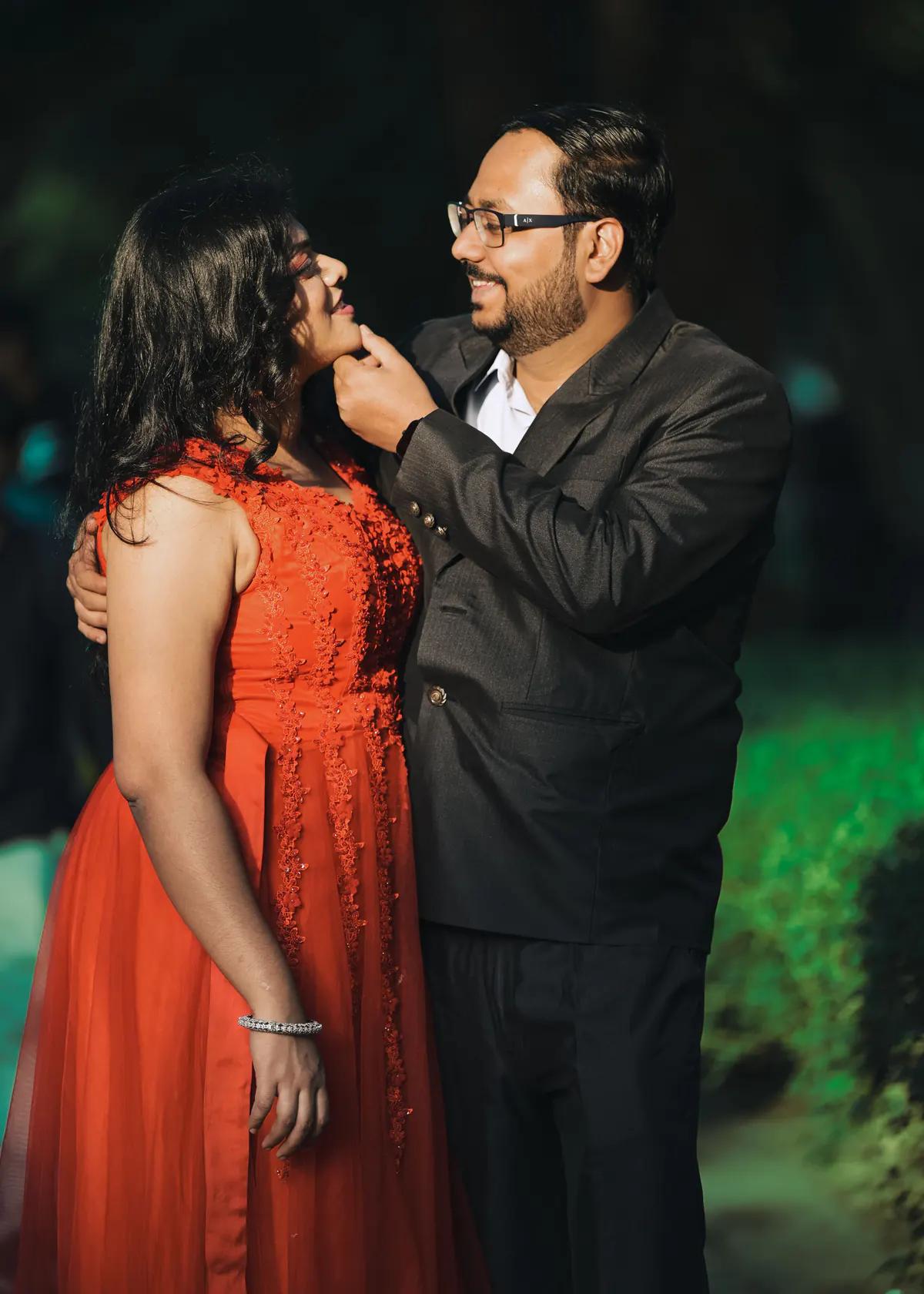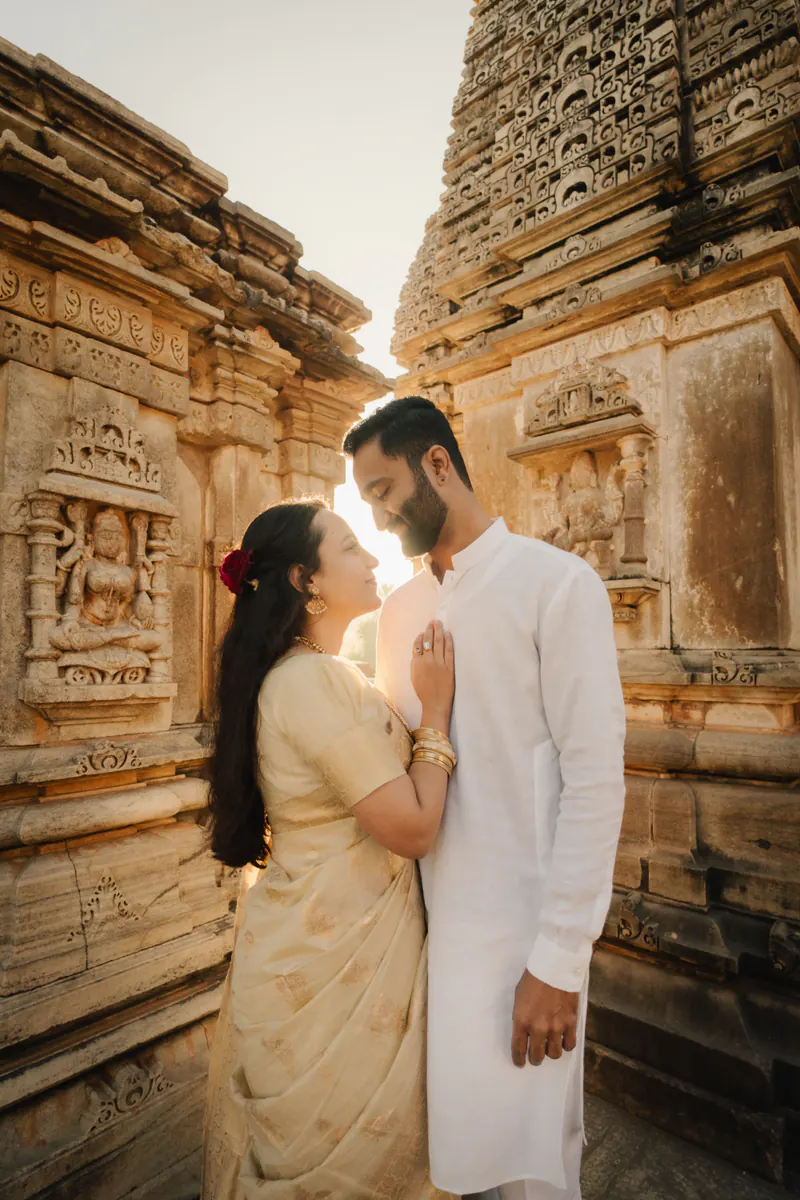
The Brahmin community, historically India's priestly and scholarly community, encompassing diverse regional and sub-community traditions across the country, has perhaps the most internally varied matrimonial culture of any Indian community. A Tamil Iyer family approaches matchmaking differently from a Kashmiri Pandit, a Bengali Brahmin, a Uttar Pradesh Brahmin, or a Maharashtrian Deshastha.
For how Evara works as a Brahmin marriage bureau in Delhi and with Brahmin families abroad, see the community page.
For Brahmin families beginning the search, for anyone serving them, and for candidates navigating the cultural expectations within their family system.
The internal diversity
"Brahmin" is an umbrella covering many distinct communities:
- North Indian Brahmins: Gaur (Punjab/Delhi/UP/Haryana), Saraswat (Kashmiri Pandit, GSB Konkani Goud Saraswat), Kanyakubja
- Tamil Brahmins: Iyer and Iyengar, with further sub-distinctions (Vadama, Brahacharanam, Vathima for Iyers; Vadakalai and Tenkalai for Iyengars)
- Kerala Brahmins: Nambudiri, Tamil-origin Tamil Brahmins in Kerala
- Karnataka Brahmins: Hoysala Karnataka, Babbur Kamme, Madhva (Vaishnava tradition), Smartha
- Bengali Brahmins: Rarhi, Barendra, Bagdi, etc.
- Maharashtrian Brahmins: Deshastha, Chitpavan, Karhade, Saraswat
- Gujarati Brahmins: Nagar, Anavil, Audichya
- Telugu Brahmins: Niyogi, Vaidiki
- Konkani Brahmins: Saraswat, Kudaldeshkar
- Kashmiri Pandits: Distinct community with Kashmir heritage
Most Brahmin families still prefer matches within their specific sub-community. Cross-Brahmin matches (e.g., Iyer to Bengali Brahmin) happen but require explicit acceptance from both families. Cross-region matches are increasingly common at upper-income tiers and among cosmopolitan urban families.
This sub-community specificity matters enormously. A Tamil Iyer family does not function the same way as a Gaur Brahmin family. Matchmakers and families need to be precise about which community is being discussed.
What the elders weigh
Across the Brahmin sub-communities, certain criteria consistently matter to elders:
Family scholarship and intellectual tradition. Brahmin families historically respect learning. Academic accomplishment, intellectual depth, scholarly pursuit are valued. A family with multiple PhDs, judges, professors, doctors, or other scholarly professionals carries weight.
Religious observance and tradition. Most Brahmin families maintain religious practice, temple involvement, festival observance, ritual continuity. The match family's religious depth matters. Practices vary by sub-community (Smartha vs Vaishnava in south; Shakta vs Shaiva in Bengal; etc.).
Astrological compatibility. Kundali matching is taken extremely seriously in most Brahmin families, often more so than in other communities. Detailed compatibility (gun milan, mangal dosha, nadi dosha) is examined.
Vegetarianism. Most Brahmin families are strictly vegetarian. Some Bengali Brahmin families consume fish; some Kashmiri Pandit families consume non-veg. Match must align on this dimension.
Family lineage and history. Multi-generational standing in the community. Reputation for ethics, scholarship, contribution to dharma.
Professional success. Modern Brahmin families typically have at least one generation in professional careers, engineering, medicine, law, academia, government. The match candidate's professional standing matters.
Gotra compatibility. Same-gotra matches are typically avoided per traditional shastras.
Sub-community fluency. Match family should share cultural fluency, language, food, festivals, customs, regional sensibility.
What the younger generation asks for
Modern Brahmin candidates (28-38), particularly those educated at IITs/IIMs/foreign universities or working in professional careers, bring additional priorities:
Career compatibility and respect. Brahmin women are now substantial professionals, doctors, professors, lawyers, executives, scientists. Marriages where the woman's career is treated as secondary often don't work for modern candidates.
Religious observance choice. Younger Brahmins vary significantly. Some are devout in continuing family traditions; others are secular or have moved toward different spiritual practices. The match conversation needs honesty about this.
Reduced caste-consciousness in cosmopolitan contexts. Younger Brahmins in cosmopolitan environments are sometimes uncomfortable with the caste-specificity of their family's matchmaking. This generational tension is real and often unspoken.
Geographic flexibility. Many younger Brahmins work in Mumbai, Bangalore, Delhi, abroad. Families often prefer matches who can return; candidates often prefer matches who'll stay mobile.
Modern family structure. Younger Brahmins often want close emotional ties with parents but separate physical households.
Intellectual partnership. Reflecting the community's scholarly tradition, many younger Brahmin candidates explicitly want intellectual peers, partners who read, debate, engage with ideas. Anti-intellectual matches often don't work.
Aesthetic compatibility. Brahmin sub-communities have distinct aesthetic textures, Tamil Iyer wedding aesthetics differ from Kashmiri Pandit, differ from Bengali Brahmin. The two families need to share or accommodate these.
Three patterns we see in successful Brahmin marriages
1. Religious observance was honestly aligned
This pattern repeats across communities but is especially important for Brahmin families. Most Brahmin families maintain some religious practice. Significant differences in observance, one family deeply observant, the other secular, produce friction even when both families intellectualize the difference.
Successful marriages involved explicit conversation about religious life in the new household, with genuine alignment achieved before commitment.
2. Sub-community fluency was respected, even in cross-community matches
Cross-Brahmin matches (e.g., Iyer to Gaur, or Bengali Brahmin to Maharashtrian Deshastha) increasingly happen at upper-income tiers. Successful ones involved both families taking time to understand each other's sub-community cultural texture, language, food, customs, festivals, social rhythms.
Failed cross-community matches often involved one family assuming the other would simply assimilate, or one candidate feeling their cultural heritage was being marginalized.
3. Intellectual peer-relationship between candidates
Reflecting the community's scholarly tradition, Brahmin marriages tend to thrive when the candidates are genuine intellectual peers. Reading together, debating, engaging with ideas, both contributing to children's intellectual development, these patterns predict marriage durability in this community more than in some others.
Marriages where one candidate was substantially less intellectually engaged than the other tended to develop drift over years, even when other dimensions were aligned.
NRI Brahmin matchmaking
Brahmin candidates are heavily represented in the Indian diaspora, particularly in the US (Silicon Valley, New York, Boston, Houston for Iyers/Iyengars; New Jersey/New York for Bengali Brahmins; Washington DC for diverse Brahmin populations), the UK, Singapore, Australia.
NRI Brahmin matchmaking patterns:
- Within-diaspora matches are common, particularly for second-generation NRIs.
- India-NRI matches happen frequently, with concerns about cultural transmission to next generation.
- Religious observance abroad is often a sustained question. Maintaining strict Brahmin practices abroad requires effort.
- Sub-community-specific diaspora networks exist (e.g., Tamil Iyer associations in Bay Area, Bengali Brahmin networks in New Jersey).
- Wedding logistics often span continents, with traditional ceremonies in India.
Special note on Tamil Brahmin matchmaking
Tamil Brahmin matchmaking deserves a brief specific note, as it's one of the most well-developed sub-community matchmaking ecosystems in India.
Tamil Brahmin families (both Iyer and Iyengar, with their respective sub-distinctions) have extremely dense community networks, well-established matchmaking institutions, and specific expectations around: educational pedigree (IIT/IIM/AIIMS often expected), astrological compatibility (detailed assessment), religious observance (varies by sub-sect), and family standing within the community.
A separate piece could be written on Tamil Brahmin matchmaking alone, given its depth. For families in this community, the matchmaking process is often more structured and information-rich than in some other Brahmin sub-communities.
What Evara does for Brahmin families
Evara has served Brahmin families across multiple sub-communities, Tamil Iyer/Iyengar, Bengali Brahmin, Maharashtrian Deshastha/Chitpavan, Gaur, Kashmiri Pandit, Saraswat, and others, for fourteen years.
For Brahmin families:
Sub-community fluency. We don't treat "Brahmin" as one undifferentiated category. Our matchmakers understand the distinctions across sub-communities and can navigate within specific ones precisely.
Astrological literacy. We respect the centrality of astrological compatibility in Brahmin matchmaking. We facilitate detailed compatibility analysis, including coordination with families' chosen astrologers.
Religious observance awareness. From strictly observant to secular, we can match families across the observance spectrum within Brahmin sub-communities.
Intellectual matching attention. We pay attention to intellectual compatibility, educational pedigree, scholarly inclinations, intellectual partnership quality. This matters in this community.
Cross-sub-community openness. When Brahmin families are open to matches across sub-communities, increasingly common at upper-income tiers, we can navigate that fluidly.
Discretion at community-appropriate level. Brahmin community networks are dense, particularly in concentrated areas. We hold sensitive information rigorously.
A closing thought for Brahmin families
For Brahmin families beginning the matrimonial search, our suggestion is this:
The Brahmin community's strength is its commitment to thoughtfulness, religious tradition, intellectual seriousness, careful evaluation. Bring that same thoughtfulness to matchmaking itself. Don't rush. Don't skip the difficult conversations about religious observance, dietary practice, professional autonomy, and family integration. Don't dismiss the candidate's own intellectual life as secondary.
The Brahmin marriages that thrive consistently embody these principles. Careful in evaluation. Honest in conversation. Respectful of both families' traditions. Committed to the candidates' genuine partnership.
We've been honored to do this work across many Brahmin sub-communities. We hope to continue.
Evara Matrimony has served families since 2012. For our four matchmaking tiers, from Membership, where matches are chosen for you, to invitation-only Luxe service, visit evaramatrimony.com. For Brahmin families, our Select, Reserve, and Luxe tiers include matchmakers with sub-community-specific expertise across Tamil, Bengali, Maharashtrian, Kashmiri, Gaur, and other Brahmin traditions.