NRI Matrimony, Australia
Indian matrimonial services across Australia
Matching Indian families across Australia with families in India and the diaspora.
NRI Matrimony, Australia
Matrimonial services for NRI families in Australia
Evara has worked with NRI families in Australia since 2012, from Delhi.
The full answer
Evara Matrimony has worked with NRI families in Australia since 2012, from its one office in Delhi. Sydney and Melbourne are 4 hours 30 minutes ahead of India in the Australian winter and 5 hours 30 minutes in summer, Perth 2 hours 30 minutes all year, so the Delhi desk is open through the Australian afternoon. Introductions open on video.
The things distance makes harder
What Australian Families Weigh
Matchmaking in Australia carries considerations a search inside India never has to think about. We plan for each of them.
Visa and PR pathway
A family on a skilled or student visa, a permanent resident, and a citizen each have a different footing. We treat visa and residence status as part of compatibility, discussed openly rather than discovered late.
Staying, returning, or moving on
Some families intend to build a permanent life in Australia; others weigh a return to India or a move elsewhere. That intention shapes who will suit, and we establish it early.
Many communities, one country
Punjabi, Gujarati, Tamil, Telugu, Malayali, and other families all live here. We match to your community, mother tongue, and customs rather than a single idea of the Indian Australian.
An offset that runs forward
On the east coast the clock is at least 4 hours 30 minutes ahead of India, and in Western Australia 2 hours 30 minutes ahead of India. Every call and introduction is scheduled around both households so no one decides at an unreasonable hour.
What a check settles
Selfie and ID checks are optional and establish a name and a photo. A visa grant, a qualification or a job is for the two families to confirm with each other, because Evara verifies none of them.
Privacy in diaspora circles
Community circles across Australian cities are close, and word travels. Your details are shared only with your explicit approval and never listed publicly.
- Clients50,000+
- Years14+
How it works.
Three steps, all in the Evara app.
Create your profile
Verified before it goes live.
Receive your matches
Each morning, in the app.
Say hello
Chat opens when you both agree.
Two ways to begin.
On the Evara app, or with a dedicated matchmaker for your family.
| Membership | Personalised matchmaking | |
|---|---|---|
| Who leads | You, on the Evara app. | A dedicated matchmaker. |
| Included | Verified matches each morning; chat when you both agree. | A shortlist, and introductions arranged. |
| Price | Free to join | From ₹51,000 |
| Start free membership | See the matchmaking tiers |
Real couples. Real families.
These reviews describe our personalised matchmaking service, which families have used since 2012.

Forever grateful for your dedication throughout our journey. Truly a wonderful experience.
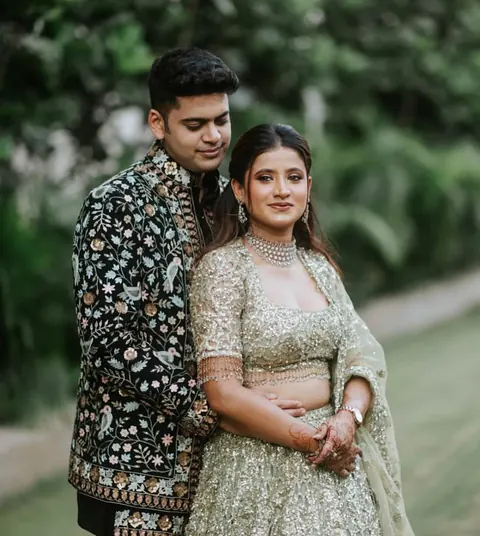
A heartfelt thank you for your company throughout this beautiful journey.

Matchmaking across Australia
A Fast-Growing Community
The Indian community in Australia has grown into one of the country’s largest and fastest-changing. In the 2021 Census, India was the second most common country of birth among overseas-born residents, after England, and Punjabi was recorded as the fastest-growing language in the country. Hinduism and Sikhism are among Australia’s fastest-growing religions. This is a young, expanding diaspora, and for many of these families a life partner who shares their community, language, and values still matters as much as it did at home, even as the arranging of it becomes harder across an ocean.
Where families settle shapes the search, and each city carries its own mix of communities and generations. A recently arrived family on a skilled visa and one that has raised children here for two decades are planning for different futures, and a good match takes account of which of those a family lives in rather than treating Australia as one undifferentiated place.
Whichever route you choose, the Delhi team learns your community and language and how settled you are in Australia before the first introduction, and a person checks each profile before it appears.
Ahead of India, not behind, and what it costs
Working From Australia
An Indian family in Australia may be newly permanent in Melbourne, long settled in Sydney, or on a skilled or student visa in Perth, and each stands on a different footing when a match is discussed. Evara Matrimony has matched Indian families across Australia with families in India and the diaspora since 2012, from one office in Delhi. Because Australia runs ahead of India, the Delhi desk is open through your afternoon: call or WhatsApp +91 93555 66533 after lunch, your time, or join free online.
Australia, like Singapore, sits ahead of India rather than behind it. Sydney and Melbourne are 4 hours 30 minutes ahead of India in the Australian winter and 5 hours 30 minutes during daylight saving, Brisbane stays 4 hours 30 minutes ahead all year, and Perth 2 hours 30 minutes. The Delhi desk, open Monday to Saturday, 10 AM to 7 PM IST, is therefore at work through the Australian afternoon and into the evening, so a call after work from Melbourne or Perth can still reach a person.
Melbourne and Sydney hold the largest Indian-Australian populations, with substantial and growing communities in Perth and Brisbane, and many families arrived through skilled migration or study, so one household may be on a temporary visa, another newly permanent, and a third long settled. A match may be in another Australian city, in India, or in Singapore or the Gulf, and every introduction opens on video before anyone commits to a long flight.
After the wedding, a spouse joining from India applies for a partner visa through the Department of Home Affairs, and we point families to that department for the steps. Joining Evara is free and every price is quoted in rupees: membership brings matches chosen for you with nobody assigned to your family, and Select and Reserve add a named matchmaker. Both routes are costed further down this page.
Skilled migration, students, and settling
Pathways and Plans
It helps to understand how many families arrive here, because it shapes what they are planning for. A large share of the Indian community came through skilled migration and study. Australia’s General Skilled Migration is a points-based permanent residence pathway administered by the Department of Home Affairs, and many families move from a temporary visa toward permanent residence and eventually citizenship over several years. A recent arrival still working toward that and a long-settled citizen are simply at different stages, and a match that assumes everyone is equally rooted misses the reality of a lot of Australian families.
So the first conversation asks where each household stands on that road, and whether the couple expects to stay in Australia for good, return to India, or move on. Those two answers shape the shortlist more than any other, and both families deserve to hear them before an alliance is discussed. The Department of Home Affairs, not a matchmaker, is the authority on the visa itself.
Strong links, and video first
Close Ties, Long Flights
The links between India and Australia have deepened quickly. The Australia-India Economic Cooperation and Trade Agreement entered into force at the end of 2022, education and business ties are dense, and travel between the two countries is heavy. What distance still adds is a long flight, so we keep introductions video-first and let both families assess one another before anyone books one.
Once a match becomes a marriage, the usual cross-border practicalities follow. A foreign-national spouse can, in time, apply for Overseas Citizenship of India, the status introduced in 2005, generally once the marriage is registered and has subsisted for at least two years. Because India has been part of the Hague Apostille Convention since 2005, an Indian marriage certificate can be apostilled for legal use in Australia, which smooths spousal and immigration filings. We are not lawyers or migration agents, so the official sources carry the detail; our part is the match and the two families.
What It Costs
Two routes for families in Australia, and what each costs
The difference between the two routes is who does the choosing. On membership the matching is algorithmic and a person checks each profile. On the matchmaker led services a named person reads your family and picks every introduction.
Membership
₹999 a month, and nothing at all to join
Matches are chosen for you and a small set arrives each day. Every profile is checked by a person before it appears. Nobody is assigned to your family. Lifetime is the same service bought once instead of monthly. Membership does not include a matchmaker, and the membership page sets out what selection involves and what the Select and Reserve tiers add. Is a matchmaker included. What each check establishes, and what it does not, is set out on the profile verification page. How profiles are checked.
See every membership term and lifetime
Matchmaker led
Select from ₹51,000 for 6 months (also ₹75,000 for 12 months or ₹1,00,000 until married)
Reserve is ₹2,51,000 in total, in two parts, with the second part due at a Roka with a family Evara introduced. Luxe is by invitation.
A named relationship manager learns your family, chooses each introduction by hand, gives you the reasoning for it, and is with you at family meetings in Delhi NCR, and on video call across India. Select is the first of these services and Reserve is the senior service above it. Each is bought separately, from the other and from membership.
Lifetime membership is one payment that never renews, and it is priced on its own page. Select and Reserve are priced inclusive of GST, and each is bought on its own. Read the Payment Terms before you pay.
✦ Reserve suits Australian families who want a senior matchmaker to handle the entire search. For families who want complete privacy, our invite-only Luxe service never lists your family in the searchable member database or in search, with a Senior Relationship Manager and full discretion. Membership and details are discussed privately. Who the assisted service suits, and who it does not, is set out on the matchmaking page. Who it suits.
Explore the NRI service
NRI Matchmaking
Australia is one corridor in a wider NRI practice. Explore the hub and the countries where Australian families often have relatives.
Other services we offer
Explore More
Evara provides specialised matchmaking across different needs:
Indian matrimony in Australia FAQs
Which Indian communities do you match across Australia?
Punjabi, Gujarati, Tamil, Telugu, Malayali, and many other families live across Australia, concentrated in Melbourne and Sydney with growing communities in Perth and Brisbane. We ask what community, mother tongue, and customs matter to your family and match to that precisely rather than treating Australia as one category.
Can visa and PR plans be part of matching?
They should be. Many Indian Australians came through General Skilled Migration or a student visa, and a family on a temporary visa, a new permanent resident and a citizen are planning for different futures. We ask where each household stands on that path at the first conversation, and point families to the Department of Home Affairs for the formalities.
What is checked about a family across Australia and India?
Selfie and ID checks are optional and establish a name and a photo. Education, employment, visa status and family background are not verified, so the two families ask about them directly, and each introduction opens on video before anyone travels.
What is the time difference between Australia and India?
Australia is ahead of India, not behind: 4 hours 30 minutes on the east coast in winter, 5 hours 30 minutes in Sydney and Melbourne during daylight saving, and 2 hours 30 minutes in Perth all year. The Delhi desk hours land in the Australian afternoon and evening, and in-person meetings are arranged around visits home, festivals, or a trip planned for the purpose.
Common Questions
Evara is based in India. How does an Australian family work with it?
Through one office, and no other. Evara sits in Pitampura in North Delhi, with nothing in Sydney, Melbourne or Perth, and Australian families have been served from Delhi since 2012. Timing is the only genuine friction, and it runs the opposite way to North America: the Delhi office answers 10am to 7pm Indian time, GMT+5:30, Monday to Saturday, which is the Australian afternoon and evening, so a call after work from Sydney or Melbourne often still reaches a person. Where it does not, WhatsApp on +91 93555 66533 needs nobody awake at once, and evaramatrimony.com/contact takes a callback request. The one Evara office, its hours and how to book an appointment are on the contact page. Where the office is.
Can you match an Australian family with one in Singapore or the Gulf?
Yes. Singapore sits between Australia and India and many families have relatives there, and the Gulf is a common third corridor. Introductions across two countries open on video, and a meeting in person is usually planned for a trip home to India that both families were making anyway.
What happens with documents after the wedding?
A spouse joining from India applies for a partner visa through the Department of Home Affairs. A foreign-national spouse can later apply for Overseas Citizenship of India, generally once the marriage is registered and has lasted two years, and an Indian marriage certificate can be apostilled for use in Australia. We are not lawyers or migration agents, so we point families to the official sources.
Begin your Australia alliance
Free consultation. Every enquiry personally attended to.